A decade of doomsday predictions, political hysteria, and the investors who paid the price for listening.
This morning (April 8,2026), futures tied to the Dow surged over 1,000 points. S&P 500 futures jumped nearly 2.7%. Oil prices cratered more than 15%. The catalyst? A two-week ceasefire between the United States and Iran, brokered through Pakistani mediation, appears to be the beginning of the end of a five-week conflict that rattled global markets and sent crude above $115 a barrel.
If you have been reading the headlines over the past month, you would have been convinced this was the beginning of World War III. You would have been told to sell everything. You would have been assured that this time was different.
It was not different. It never is.
What follows is a walk-through of the last decade of panic, the people who stoked it, and the extraordinary cost investors have paid for listening. The through line is not complicated: when politics infects your portfolio, your portfolio suffers. Period.
Meet the Panicans
First, a definition. A Panican is a pundit, strategist, or commentator who consistently predicts catastrophic market outcomes with high confidence, is proven wrong by the subsequent data, and yet never updates their framework. The term is intentional. These are not analysts making reasonable risk assessments. They are performers whose panic is the product.
Before we walk through the timeline, let me introduce you to a cast of characters. Some are economists. Some are market strategists. Some are media personalities. What they all have in common is a pattern: confident, loud predictions of doom that turned out to be spectacularly wrong at exactly the moments when investors should have been getting more aggressive, not less.
These are not bad people. Most of them are genuinely smart. But intelligence without discipline is a liability, and when political bias or structural bearishness infects your worldview, it turns your analysis into a contrarian buy signal for the rest of us.
The Econ and Political Pundits
PAUL KRUGMAN — Nobel Prize-winning economist, New York Times columnist
“If the question is when markets will recover, a first-pass answer is never. We are very probably looking at a global recession, with no end in sight.”
Said on election night 2016. The Dow hit an all-time high 9 hours later. He later admitted he “reacted badly.” The Atlantic diagnosed him with “Trump Derangement Syndrome.”
STEVE LIESMAN — CNBC Senior Economics Reporter
“What President Trump is doing is insane. It is absolutely insane. There is just no other way of describing it.”
Said on air in March 2025 about tariffs. By December 2025, inflation had moderated to 2.7% and the S&P 500 posted its third consecutive year of double-digit gains. He was visibly stunned on live television by the positive CPI data.
TOM WOODS — Libertarian economist and commentator
Persistent warnings about government spending, deficits, and inevitable economic collapse.
Has been forecasting imminent fiscal catastrophe for years while the S&P 500 has roughly quadrupled from its 2016 levels. The deficit hawks have been right about the deficits and wrong about the market consequences for an entire generation.
The Market Strategists
MARKO KOLANOVIC — Former Chief Market Strategist, JPMorgan Chase
“We do not see equities as attractive investments at the moment, and we don’t see a reason to change our stance.” S&P 500 target: 4,200.
Maintained this bearish call through 2023 and 2024 while the S&P 500 rallied over 40%. Was bullish through the 2022 bear market, then flipped bearish right at the October 2022 bottom. JPMorgan showed him the door in July 2024. CNBC had once called him “half-man, half-god.” Bloomberg called him “Gandalf.” The market called him wrong.
BOB ELLIOTT — CEO, Unlimited Funds (Bridgewater alum)
Repeatedly warned that stock market optimism was “getting ahead of economic realities” and cautioned that conditions resembled 1970s-style stagflation.
Throughout 2023 and 2024, while Elliott cautioned the economy would slow and markets were overpriced, the S&P 500 posted back-to-back gains of 24% and 23%. The recession he warned about never materialized.
MIKE GREEN — Chief Strategist, Simplify Asset Management
“We’re possibly setting ourselves up for the worst financial experience of all time” due to passive investing flows.
Green’s thesis that passive investing has created catastrophic structural fragility has been a consistent theme for years. Meanwhile, the very passive index funds he warns about have delivered one of the greatest stretches of returns in market history. Three consecutive years of double-digit S&P 500 returns.
LUKE GROMEN — Founder, Forest for the Trees (FFTT)
“Recession is inevitable.” Called for dollar collapse, sovereign debt crisis, and Treasury market dysfunction as imminent risks.
Predicted recession was inevitable in 2023. It never came. Warned of dollar collapse. The dollar remained resilient. Forecast Treasury dysfunction as near-term certainty. None materialized on his timeline. His macro framework is intellectually fascinating and may eventually prove correct, but following it as a trading signal has cost his audience years of compounding returns.
SCOTT GALLOWAY — NYU Professor, host of Pivot and Prof G podcasts
“I think we’re on the precipice of like a $10 trillion dollar wipeout.” Warned that the Iran war would trigger an ’08-style “which bank is next?” moment through emerging market sovereign defaults.
Said on Pivot podcast in March 2026, weeks before the ceasefire. The S&P 500 never even reached a 10% correction. No emerging market sovereign defaults materialized. Oil is already down 15% this morning. The $10 trillion wipeout did not happen.
Here is the critical point about these individuals: they are not dumb. Several of them are brilliant. But brilliance without humility, without the ability to say “I was wrong and the market is right,” becomes a trap. And that trap has cost their followers dearly.
Now, let us walk through the episodes where their warnings were loudest and where the buying opportunities were greatest.
NOVEMBER 2016
The Election That Would End the World
The night Donald Trump won the presidency, S&P 500 futures plummeted nearly 5%. Dow futures crashed 800 points. The financial media declared it a catastrophe in real time.
Krugman published his “markets will never recover” take before most Americans had gone to bed. Larry Summers projected “a protracted recession to begin within 18 months.” Steve Rattner promised “a market crash of historic proportions.” Eric Zitzewitz, formerly of the IMF, predicted “a likely crash in the broader market.”
What actually happened? The Dow soared 257 points the very next day, brushing against all-time highs. That “never” recovery took roughly nine hours. Over the following year, the Dow climbed approximately 35%, adding some $6 trillion in household wealth.
+35%
DOW JONES RETURN IN THE YEAR FOLLOWING THE 2016 ELECTION
Q4 2018
The First Trade War
By the fall of 2018, the U.S.-China trade conflict dominated headlines. Tariff escalation, a hawkish Federal Reserve, and a brief yield-curve inversion sent markets into a tailspin. The S&P 500 fell 13.5% in the fourth quarter, posting its worst December since 1931. The index nearly entered bear market territory, dropping 19.4% from its September peak to its Christmas Eve trough.
The bears were everywhere. The recession callers were triumphant. The “Trump’s trade war will destroy the economy” narrative was treated as established fact. This was the first major test of a pattern we would see repeated again and again: escalation, panic, resolution, violent repricing higher.
Then the calendar turned. In 2019, the S&P 500 returned 31.5%, its best year since 2013. Investors who added to their positions during that gut-wrenching December were rewarded handsomely. Those who sold near the lows spent the next year watching from the sidelines.
+31.5%
S&P 500 RETURN IN 2019, FOLLOWING THE Q4 2018 PANIC
MARCH 2020
COVID: The Fastest Bear Market in History
On February 19, 2020, the S&P 500 closed at an all-time high. Thirty-three days later, it had fallen 34%. Circuit breakers tripped multiple times. On March 16, the index dropped nearly 12%, the worst day since 1987. The panicans were in full throat. The world was ending. The economy would never recover.
On March 18, 2020, with the S&P 500 already down over 25% and still falling, our CEO Aaron Tuttle hosted a market update call with clients. While the financial media was running wall-to-wall panic and most strategists were calling for further downside, Aaron drew on a historical precedent that almost no one was talking about.
“When the Spanish flu subsided in February 1919, the market began an increase of 50%. It does provide encouragement that once the coronavirus begins to subside, the market will bounce back once again.”
— AARON TUTTLE, CEO, GATEWOOD WEALTH SOLUTIONS, MARCH 18, 2020
Aaron did not stop at the historical comparison. He made a specific call about the shape and speed of the recovery that, in the moment, sounded almost reckless in its optimism.
“Every indication is that once this passes it could be very, very quick and we’ve seen it right… it’s just as quick on the upside.”
— AARON TUTTLE, CEO, GATEWOOD WEALTH SOLUTIONS, MARCH 18, 2020
He pointed to the massive fiscal and monetary stimulus that was already being deployed, noting that “if you have that much fuel, it’s going to come back much, much faster.” And he predicted that “confidence should quickly rebound once the event passes simply due to the relief.”
That call was made five days before the S&P 500 hit its absolute low on March 23. The V-shaped recovery Aaron described is exactly what happened. The index doubled from its lows in 354 trading days, the fastest bull market doubling since World War II.
Here is what is remarkable about the contrast. While Aaron was telling clients to stay the course and prepare for a rapid snapback, the panican class was doing the opposite. Kolanovic, to his credit, made a similar bullish call in late March 2020, predicting the S&P 500 would quickly recover to all-time highs. It was bold, contrarian, and correct. But the tragedy of Kolanovic’s story is what came next. Having earned enormous credibility, he proceeded to stay bullish through the entire 2022 bear market, then turned bearish at the exact bottom in October 2022, and remained bearish through a 40%+ rally. He turned one spectacular correct call into two years of wrong calls that ended his career at JP Morgan.
Aaron, by contrast, has maintained the same disciplined framework across every crisis on this list. Market corrections and bear markets are normal. Selloffs end. Stay invested. The consistency of that message, delivered calmly during the worst moments, is what separates an advisor from a pundit.
For the rest of us, the lesson from COVID was clear: the investors who sold at the bottom missed one of the greatest buying opportunities of a generation. The four-year annualized return from that March 23, 2020 bottom? Approximately 25.7%.
+150%
S&P 500 TOTAL RETURN IN THE 4 YEARS FOLLOWING THE COVID LOW
LATE 2021 – 2022
Inflation Was Not Transitory
To be fair, there was one moment where the establishment consensus was dangerously wrong in the other direction. Throughout 2021, the Federal Reserve insisted that surging inflation was “transitory.” It was not.
Consumer prices hit 40-year highs. The Fed was forced into the most aggressive rate-hiking cycle in a generation. The S&P 500 fell 25% from its January 2022 peak to its October trough. The Nasdaq plunged 33%.
This is where the structural bears had their moment. Gromen’s fiscal concerns were manifesting in real-world inflation. Credit where credit is due.
But being right about the diagnosis does not mean you were right about the prescription. The bears told you to sell. They told you recession was “inevitable.” Eighty percent of economists predicted a 2023 recession. It never came. The S&P 500 rallied off its October 2022 lows and posted double-digit gains in 2023, 2024, and 2025. Three consecutive years.
Being right about the problem does not make you right about the solution. The bears correctly identified inflation. They were dead wrong about what it meant for equity investors who stayed the course.
APRIL 2025
Liberation Day and the Tariff Tantrum
On April 2, 2025, President Trump announced sweeping “reciprocal” tariffs that exceeded even the most bearish expectations. In four days, the S&P 500 shed more than 12%. The Dow lost nearly 4,600 points.
Liesman went on CNBC and called the tariff policy “insane,” comparing it to “steering the Titanic towards the iceberg.” UBS warned of a “meaningful recession.” The panicans were vindicated. For about a week.
Seven days later, Trump announced a 90-day pause. The S&P 500 surged 9.5% in a single session. By May 13, the index was positive for the year. By June 27, 2025, it hit a new all-time high. By December 2025, inflation had moderated to 2.7% and Liesman was visibly stunned on live television by how good the data looked.
This is where the pattern becomes undeniable. And this is where our Chief Investment Officer, Chris Arends, published an internal framework that we believe every investor should understand.
In March 2026, our CIO Chris Arends distributed an internal briefing we titled “The Trump Conflict Playbook.” The thesis is straightforward: since Trump’s 1st term, every major geopolitical and trade conflict has followed a repeating 10-step cycle from escalation to resolution. Every single one has ended with a deal.
The cycle moves through three phases. First, a Pressure Phase where posturing and escalation build credibility. Second, a Volatility Phase where markets price in a prolonged conflict and defensive positioning reaches an extreme. Third, a Resolution Phase where de-escalation signals emerge, a deal is struck, and markets reprice violently higher.
The key insight: the repricing is abrupt, not gradual, because by the time a deal becomes credible, investors are already defensively positioned. When uncertainty collapses, those positions unwind all at once. This pattern played out in the April 2025 tariff pause, the August 2025 extension, the October 2025 China deal, the January 2026 Greenland/EU deal, the February 2026 India deal, and now the Iran ceasefire.
The playbook’s conclusion, written five weeks before today’s ceasefire: “Trump does NOT want a forever war. His top three policy priorities are all directly undermined by a prolonged conflict. Investors currently defensively positioned should expect that unwind to be swift.”
+16%
S&P 500 RETURN IN THE YEAR SINCE “LIBERATION DAY” (APRIL 2025)
APRIL 2026
The Iran Conflict: Today’s Resolution
On February 28, 2026, the United States and Israel launched airstrikes on Iran. The conflict closed the Strait of Hormuz, sent oil surging nearly 70%, pushed gasoline above $4 a gallon, and knocked the S&P 500 down nearly 10% from its highs.
The Conflict Playbook called it in real time. In early March, with markets deep in the Volatility Phase (Step 6), the framework identified that Brent crude crossing $85, the Dow falling over 1,100 points, and markets pricing in prolonged conflict risk were the exact conditions that historically precede de-escalation. The playbook noted key thresholds: Brent above $90, equities down 5%+, and gas prices up 10%+ as triggers that would substantially raise the probability of negotiation headlines.
“We’re on week three. I know it sounds a little crazy to think this could be done in 2 to 3 weeks, but that has really become our base case that it’s not a prolonged conflict. He wants to make you think it is because that’s his steps before de-escalation.”
— Chris Arends, MARCH 20th, 2026
Our team’s conviction was rooted in a simple observation: a prolonged war accomplished none of Trump’s stated objectives. As we noted at the time, “I think Trump signaled he wants this conflict to be done before he goes to China and has that summit.” The escalation was not the strategy. The escalation was the leverage. The strategy was always the deal.
Every threshold was breached. And exactly as the framework predicted, the resolution followed. A ceasefire brokered through Pakistan, a commitment to reopen the Strait of Hormuz, and peace talks scheduled for Friday in Islamabad.
As of this morning, S&P 500 futures surged 2.7%. Dow futures jumped over 1,000 points. Oil cratered more than 15%. The S&P 500 sits at roughly 6,600, just 5.5% below its all-time high. The conflict’s maximum drawdown never even reached the technical definition of a correction.
Step 10 of the playbook: “The violent repricing and political victory lap.” That is today.
The Panicans as Contrarian Indicators
Here is the uncomfortable truth that nobody on financial television will say out loud: the loudest voices during market panics are almost always the best contrarian buy signals available.
When Krugman says markets will “never” recover, buy. When Kolanovic’s bearish target is the lowest on Wall Street, buy. When Liesman calls policy “insane” on live television, buy. When Gromen says recession is “inevitable,” buy. When Green warns of “the worst financial experience of all time,” buy. When 80% of economists predict a recession, buy.
This is not a joke. This is a decade of data. Every single major bottom on this list was accompanied by maximum bearish consensus from the panican class. And every single one was followed by substantial gains for investors who had the discipline to act against the prevailing narrative.
Kolanovic’s story is perhaps the most instructive. He was once the most respected strategist on Wall Street. He made one of the great calls of the COVID era. And then his bearish bias consumed him. He maintained a 4,200 S&P target while the index screamed past 5,500. JPMorgan let him go in July 2024. The S&P 500 has gained roughly 40% since the October 2022 bottom he told everyone to sell.
The loudest voices during market panics are almost always the best contrarian buy signals available. This is not an opinion. This is a decade of data.
Trump Derangement Syndrome Destroys Portfolios
There is a pattern in every single one of these episodes, and it goes beyond simple fear. It is politically motivated fear. It is what happens when a person’s deep-seated political bias distorts their ability to think clearly about markets, economics, and risk.
When someone suffers from Trump Derangement Syndrome, their analytical framework collapses. They cannot see the economy for what it is because they are too busy seeing it through the lens of what they desperately want it to be. They want the other side to fail. They want the market to punish the country for making what they consider the wrong electoral choice. And that desire, whether conscious or not, infects every financial decision they make.
Look at the evidence. Krugman predicted a “global recession with no end in sight” not because his models told him so, but because he was horrified by the election result. The Atlantic later diagnosed Krugman specifically with Trump Derangement Syndrome by name. He himself admitted he “reacted badly.”
Liesman, separately, called tariff policy “insane” on live television not because the data supported that conclusion, but because his political priors told him protectionism could not possibly work. When the inflation data came in better than expected months later, he was visibly shocked on his own broadcast.
Tom Woods, for all his economic sophistication, has been so consumed by his ideological opposition to government intervention that he has missed one of the greatest wealth-creation periods in American history. His audience has been told for years that the fiscal house of cards is about to collapse. It has not. And every year they stayed underweight equities on that thesis, they fell further behind.
On the market strategist side, the pattern is slightly different but equally costly. Kolanovic, Elliott, Green, and Gromen are not motivated by partisan politics in the same way. Their bias is structural. They see systemic risks, passive flow distortions, fiscal unsustainability, and market fragility. And they are not entirely wrong about any of those things. But the gap between “these are real risks” and “sell your stocks now” is where fortunes are made and lost. Being aware of structural risk is wisdom. Letting structural risk prevent you from participating in a generational bull market is tragedy.
The panicans are often directionally correct. Deficits are unsustainable. Passive flows do distort price discovery. Valuations do get stretched. Geopolitical risk is real. But direction without timing is not an investment thesis. It is a worry. And worries do not compound. Equities do.
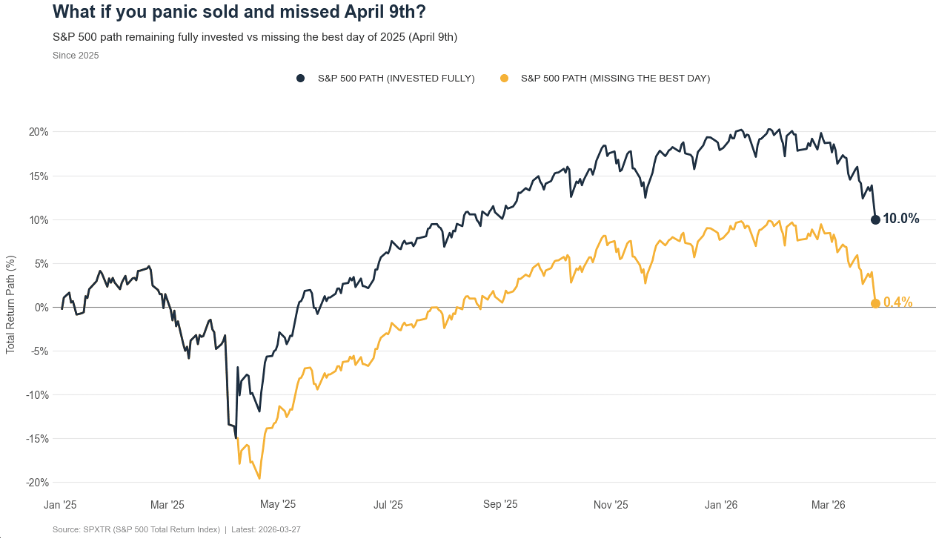
The chart above from Ritholtz tells the story as well as any paragraph can. Missing just the single best day of 2025, April 9th, the day Trump announced the tariff pause, turned a 10% annual return into a 0.4% return. One day. The difference between a strong year and a lost year. That is the cost of panicking. That is the tax the panicans impose on their followers.
If you take one thing from this piece, let it be this: your political opinions and your investment strategy must live in separate rooms. The moment you allow your feelings about a president, a party, or a policy to dictate your financial decisions, you have given control of your wealth to the least rational part of your brain.
The market does not care who you voted for. It does not care how you feel about the person in the Oval Office. It cares about earnings, cash flows, innovation, and the long-term trajectory of the most dynamic economy the world has ever produced.
Stay invested. Stay disciplined. Stay rational. And when the panicans start screaming again, and they will, remember: that is your signal to get more aggressive, not less.
Sometimes the hardest part isn’t what the market is doing—it’s knowing how to respond in the moment. Having the right perspective can make all the difference. If this raises questions or you’d like to go deeper, feel free to schedule a conversation with us below.
Important Disclosures:
The opinions voiced in this material are for general information only and are not intended to provide specific advice or recommendations for any individual. All performance referenced is historical and is no guarantee of future results. All indices are unmanaged and may not be invested into directly.
Investing involves risk including loss of principal. No strategy assures success or protects against loss.
The economic forecasts set forth in this material may not develop as predicted and there can be no guarantee that strategies promoted will be successful.
The fast price swings in commodities will result in significant volatility in an investor’s holdings. Commodities include increased risks, such as political, economic, and currency instability, and may not be suitable for all investors.
The S&P 500 Index is a capitalization-weighted index of 500 stocks designed to measure performance of the broad domestic economy through changes in the aggregate market value of 500 stocks representing all major industries.
The Dow Jones Industrial Average is comprised of 30 stocks that are major factors in their industries and widely held by individuals and institutional investors. Indexes are unmanaged and cannot be invested in directly.
The NASDAQ Composite Index measures all NASDAQ domestic and non-U.S. based common stocks listed on The NASDAQ Stock Market. The market value, the last sale price multiplied by total shares outstanding, is calculated throughout the trading day, and is related to the total value of the Index.
Much has changed since then. Tax filing season opened on January 26th, more than three million families have now signed up, a Super Bowl ad ran during the pregame broadcast, President Trump promoted the accounts during his State of the Union address on February 24th and directed the nation to trumpaccounts.gov, and a new online sign-up option just launched.
Here’s our refreshed take on what this program means for your family.
The Basics: What Are Trump Accounts?
Trump Accounts, formally known as 530A Accounts under the One Big Beautiful Bill Act, are a new type of individual retirement account designed specifically for children. They’re custodial in nature, meaning a parent or guardian controls the account until the child turns 18.
How the Trump Accounts Actually Work
Eligibility: Any U.S. citizen under age 18 with a valid Social Security number can have an account opened on their behalf. Each child may have only one Trump Account.
Account Benefits
The $1,000 Seed: Children born between January 1, 2025 and December 31, 2028 who are U.S. citizens are eligible for a one-time $1,000 pilot program contribution from the U.S. Treasury. This deposit is expected no earlier than July 4, 2026.
Annual Contributions: Families, employers, and others may contribute up to a combined $5,000 per child per year. Employers may contribute up to $2,500 (per employee) of that amount under Section 128 as a fringe benefit. The $5,000 limit will be adjusted for inflation starting in 2027. No earned income is required, and contributions don’t affect traditional or Roth IRA limits for the contributor.
Account Limitations
Charitable & Government Contributions: Qualified general contributions from government entities and 501(c)(3) organizations do not count against the $5,000 annual limit. These are separate and additive.
Investment Rules: All funds must be invested in low-cost, broad U.S. equity index funds or ETFs tracking qualified indexes such as the S&P 500. Annual fees are capped at 0.10% (10 basis points), and no leverage is permitted.
No Withdrawals Before 18: Generally, no distributions may be made before the year the child turns 18, with very limited exceptions for death, excess contributions, and certain rollovers.
What’s New About Trump Accounts Since December
1. Tax Season Sign-Ups Are Live
As of January 27, 2026, families can elect to open Trump Accounts by filing IRS Form 4547 with their 2025 federal tax return. The form includes two elections: one to open the account and one to request the $1,000 pilot program contribution (if eligible).
The form accommodates up to two children and families with more eligible children can attach additional copies. Filing electronically with your tax return is the fastest and easiest method.
2. New Online Sign-Up Option
Following the Invest America Super Bowl ad last weekend, a new online sign-up form launched at trumpaccounts.gov, ahead of the originally planned mid-2026 timeline. This gives families a second pathway to open accounts outside of the tax filing process. Here’s what the sign-up experience looks like:
The Form 4547 election page at trumpaccounts.govConfirmation and next steps after submission
3. Over Three Million Families Have Enrolled
According to the White House, more than three million families had signed up as of the State of the Union address on February 24th. That milestone was up from one million just five days into tax filing season, and Treasury Secretary Scott Bessent noted that approximately 500,000 elections were made in the first three days alone. During the speech, President Trump called the program “something that’s so special” that has “taken off and gone through the roof,” and directed the nation to sign up at trumpaccounts.gov.
4. Activation Timeline
After filing Form 4547, the Treasury Department will contact parents starting in May 2026 to complete an identity verification process and activate accounts. You’ll be contacted by the partner financial firm where your Trump Account will be held with further instructions. Contributions and seed deposits will begin on July 4, 2026.
5. The Dell Foundation Gift
Michael and Susan Dell have pledged $6.25 billion to seed accounts for approximately 25 million children who missed the eligibility cutoff for the $1,000 federal deposit. Their gift provides $250 per eligible child. To qualify for the Dell contribution, children must be age 10 or under, born before January 1, 2025, and live in ZIP codes where the median household income is below $150,000. This is expected to reach children across roughly 75% of U.S. ZIP codes.
An important clarification: The Dell gift goes to a different population than the Treasury’s $1,000. It is not $250 on top of $1,000. Children born 2025 through 2028 receive the $1,000 government seed. Children born before 2025 who are age 10 and under may receive the $250 Dell contribution. Both groups benefit, but through separate funding streams.
6. Growing Employer and Corporate Support
A growing list of major U.S. corporations have pledged matching deposits or contributions for employees. Venture capitalist Brad Gerstner has also pledged $250 for each child under five with a Trump Account in Indiana. We expect this trend of employer and philanthropic participation to continue expanding.
How the Tax Treatment Works
Understanding the tax treatment matters because it affects whether you should add your own money to these accounts or use other vehicles instead.
Think of it in two phases:
PHASE 1: Before Age 18 (The Accumulation Phase)
During childhood, contributions are made with after-tax dollars, and investment growth accumulates tax-deferred. Parents or guardians maintain control of the account during this period. This phase is straightforward.
PHASE 2: After Age 18 (The IRA Conversion Phase)
At age 18, Trump Accounts automatically convert to traditional IRAs. This conversion fundamentally changes how the account functions:
What Changes on Trump Accounts for Those Over 18?
Access and Control: The young adult gains full control as the account becomes a traditional IRA in their name.
Withdrawals and Taxes: This is where it gets important. Distributions are taxed as ordinary income on all earnings and growth (though your original contributions come back tax-free). Additionally, the 10% early withdrawal penalty applies to distributions before age 59½.
The Exception Rules:
The 10% penalty (not the taxes) can be waived for:
First-time home purchases (up to $10,000)
Qualified education expenses
Business startup costs in certain circumstances
Here’s the crucial point many families miss: These “qualified expenses” only waive the 10% penalty—they do NOT eliminate the ordinary income tax on the earnings. Even when funding college or buying a first home, you’ll owe income tax on all the growth.
Investment Flexibility: After conversion, the account can be invested more broadly according to traditional IRA rules, no longer restricted to designated index funds.
Why This Matters: This automatic conversion to a traditional IRA means families should carefully consider whether contributing their own funds makes sense compared to other savings vehicles like 529 plans (where qualified education withdrawals are completely tax-free) or custodial accounts (where flexibility is greater).
Our General Perspective on Trump Accounts
Accept the free money. If your child qualifies for the $1,000 Treasury seed or the $250 Dell contribution, opening an account is straightforward. You’re accepting a gift with no cost to you. We’d help every eligible family capture this benefit. The Treasury projects that the $1,000 seed alone could grow to roughly $6,000 by age 18, $15,000 by age 27, or over $243,000 by age 55, assuming historical market returns.
Think carefully about your own contributions. For most families whose primary goal is funding education, 529 plans still deliver better tax outcomes. A 529 offers completely tax-free growth potential and withdrawals for qualified education expenses. Trump Accounts tax all growth as ordinary income at withdrawal, even for education. That’s a meaningful difference.
When Trump Accounts Make Sense for Your Plan
That said, Trump Accounts can make sense when:
You’re already maximizing 529 contributions and want additional tax-advantaged savings
Your priority is very long-term wealth building, with retirement savings starting at birth
You’re targeting a first home down payment for your child
Your employer is offering matching contributions, which is additional free money worth capturing
You want to diversify across savings vehicles with different tax treatments
Check with your employer. A growing number of companies are pledging contributions to Trump Accounts as an employee benefit. If your employer is participating, that’s money you don’t want to leave on the table, similar to a 401(k) match.
Action Steps for Families
File Form 4547 with your 2025 tax return. This is the fastest way to open an account and elect the $1,000 pilot program contribution for eligible children. You can also sign up online at trumpaccounts.gov now.
Check your employer’s plans. Ask your HR or benefits team whether your company is making Trump Account contributions under Section 128.
Don’t rush your own contributions. Contributions won’t be accepted until July 4. Use this time to evaluate whether a Trump Account, 529 plan, or combination makes the most sense for your family’s goals.
Keep records. Documentation of contribution sources matters for future distribution taxes and rollover reporting. Start organized from day one.
How Gatewood Can Help You Analyze Trump Accounts
This program launches on July 4, which gives us time to plan strategically together. The questions we help families answer are straightforward but important:
Does your family qualify for the maximum benefits?
Should you contribute your own funds, or does a 529 or custodial account better serve your goals?
And how does this fit into your broader wealth-building strategy?
We specialize in exactly these conversations, the kind where “it depends” actually becomes “here’s exactly what makes sense for you.” We’re fiduciary advisors, so this isn’t about selling you on Trump Accounts. It’s about helping you make the most informed choice for your family’s specific circumstances.
Ready to discuss strategy?
Important Considerations
This program is new, and IRS regulations continue to evolve. The information provided here reflects program details as understood in December 2025, but specific rules and procedures may change as implementation progresses. Investment returns are not guaranteed, and tax laws may change. This material is educational and not a recommendation for any specific action.
For personalized guidance on whether Trump Accounts make sense for your family, we encourage you to consult with a financial advisor and tax professional who can evaluate your complete financial picture.
Important Disclosures
Content in this material is for general information only and not intended to provide specific advice or recommendations for any individual. Gatewood Wealth Solutions and LPL Financial do not provide legal or tax advice or services.
All investing involves risk including loss of principal. No strategy assures success or protects against loss.
The opinions voiced in this material are for general information only and are not intended to provide specific advice or recommendations for any individual. All performance referenced is historical and is no guarantee of future results. All indices are unmanaged and may not be invested into directly.
This information is not intended to be a substitute for specific individualized tax or legal advice. We suggest that you discuss your specific situation with a qualified tax or legal advisor.
Prior to investing in a 529 Plan investors should consider whether the investor’s or designated beneficiary’s home state offers any state tax or other state benefits such as financial aid, scholarship funds, and protection from creditors that are only available for investments in such state’s qualified tuition program. Withdrawals used for qualified expenses are federally tax free. Tax treatment at the state level may vary. Please consult with your tax advisor before investing.
Ten months ago, the sky was falling.
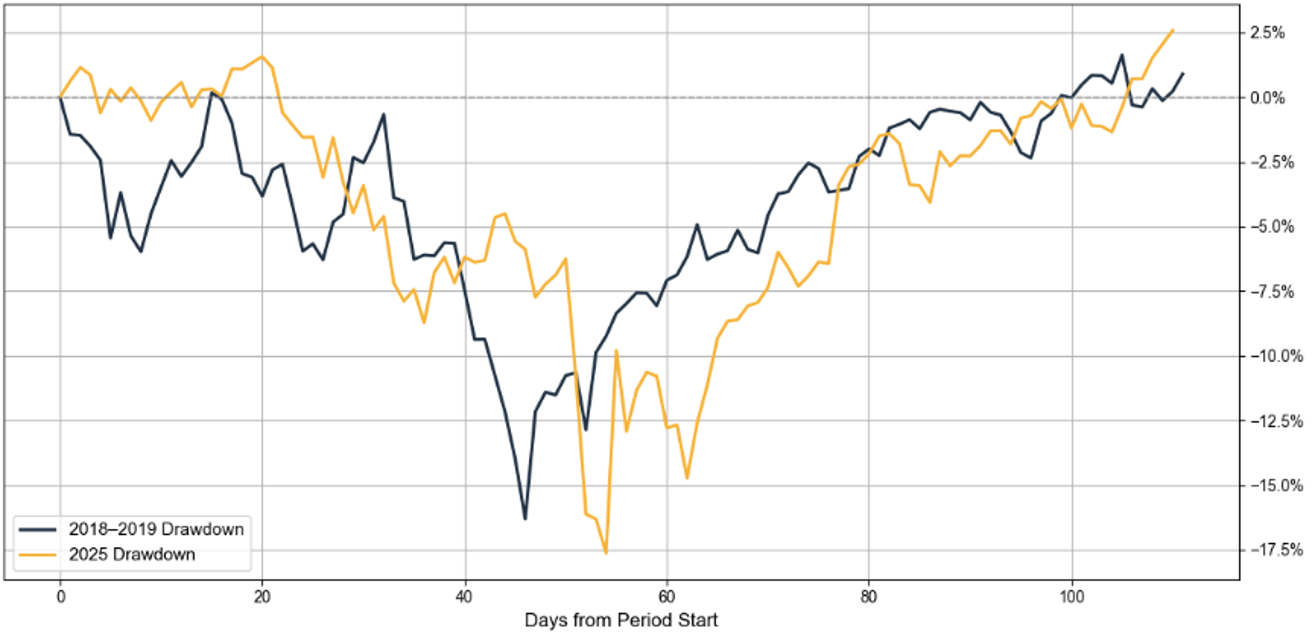
Sweeping tariff announcements sent the S&P 500 plunging nearly 20% from its February 2025 peak, wiping out over $6 trillion in market value in two trading sessions. Headlines screamed recession. Pundits predicted the worst. The temptation to sell everything and hide in cash was overwhelming.
Here’s what our clients did: absolutely nothing.
Their strategy, Fortress Gatewood, held. Their fortress held. Their portfolios recovered, and then some.
Zero families served by Gatewood Wealth Solutions panic sold during the 2025 market correction. Not one.
Today, the S&P 500 is trading near all-time highs. But we’re not writing this to celebrate. We’re writing it because the next correction is coming, and the real question is whether you’ll be ready.
What Happened: The 2025 Tariff Correction
On February 19, 2025, the S&P 500 closed at an all-time high of 6,144.
Then things got ugly. Fast.
February 19 to March 13: The S&P 500 dropped over 10% on tariff fears alone, entering correction territory before “Liberation Day” even arrived.
April 2 to April 8: Sweeping tariffs on nearly all U.S. trading partners triggered the worst two-day loss in S&P 500 history. The VIX spiked to levels not seen since the COVID-19 pandemic.
April 8: The bottom. The S&P 500 sat nearly 19% below its February peak, flirting with official bear market territory.
Then, just as quickly, the reversal. A 90-day tariff pause on April 9 sent the S&P 500 surging 9.5% in a single session, one of its best days ever. By May 13, the index was positive for the year. By June 27, it hit a new all-time high.
From the April 8 bottom to today, the S&P 500 has gained roughly 40%.
The entire round trip took about four months. Investors who sold at the bottom missed all of it.
What Is Fortress Gatewood?
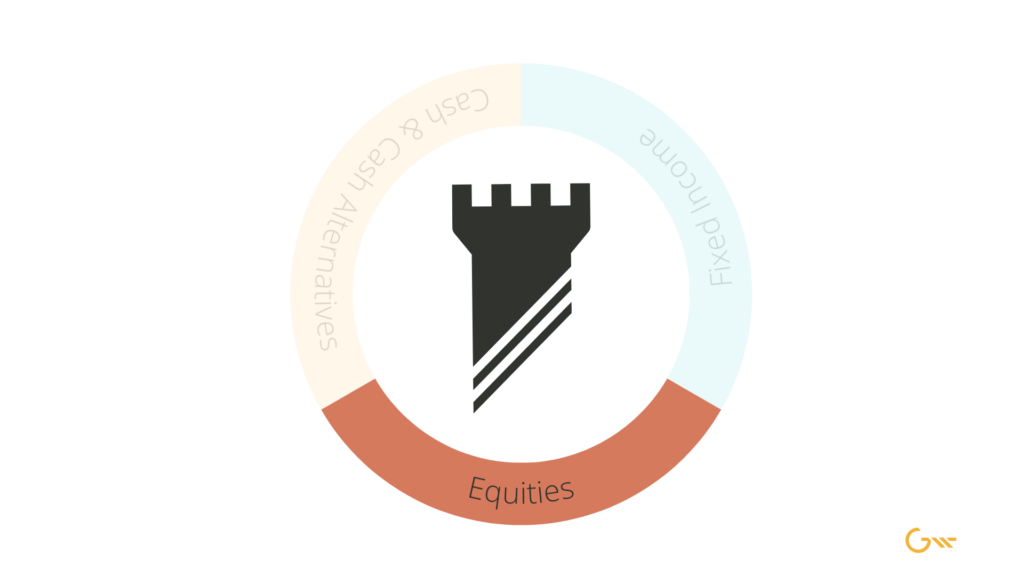
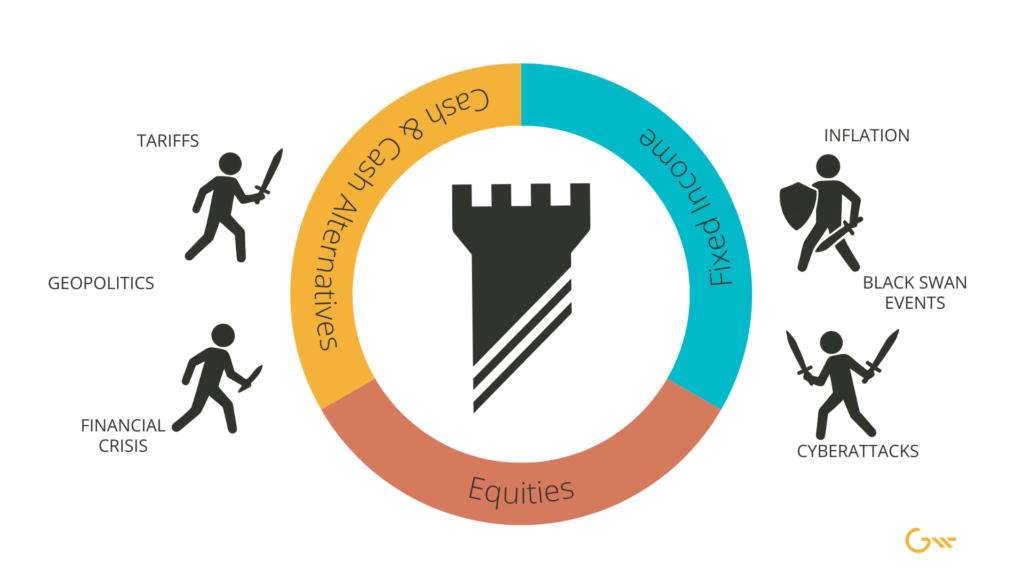
Fortress Gatewood is the planning framework we use to help families navigate market volatility without being forced into reactive decisions. It’s built around intentional layers (or “moats) of liquidity, income, and long-term growth, each aligned to different time horizons and real-world spending needs.
By clearly separating short-term cash needs, intermediate income sources, and long-term growth capital, the structure helps clients understand which dollars are meant to be used now, which are designed to support future income, and which are positioned for long-range objectives.
The goal isn’t to predict markets, but to create enough flexibility and clarity that market movement doesn’t dictate decisions when it matters most.
Download Your Free Copy
How the Fortress Worked
This is exactly the scenario Fortress Gatewood was designed for.
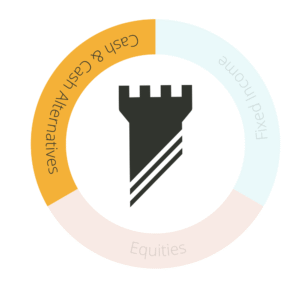
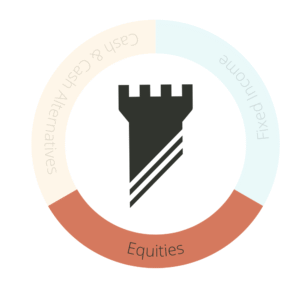
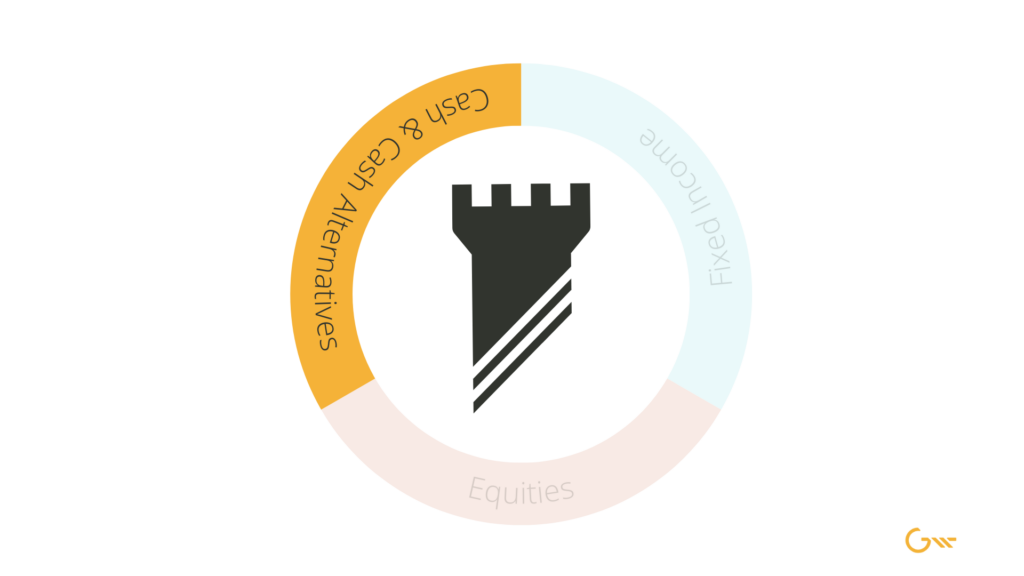
Moat Ring 1: Cash. Two years of spending in liquid reserves. No one needed to sell a single share to pay their bills. No forced selling. No panic.
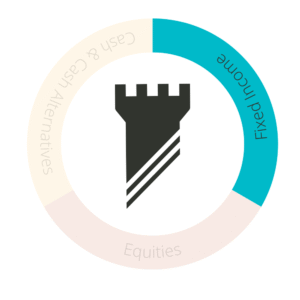
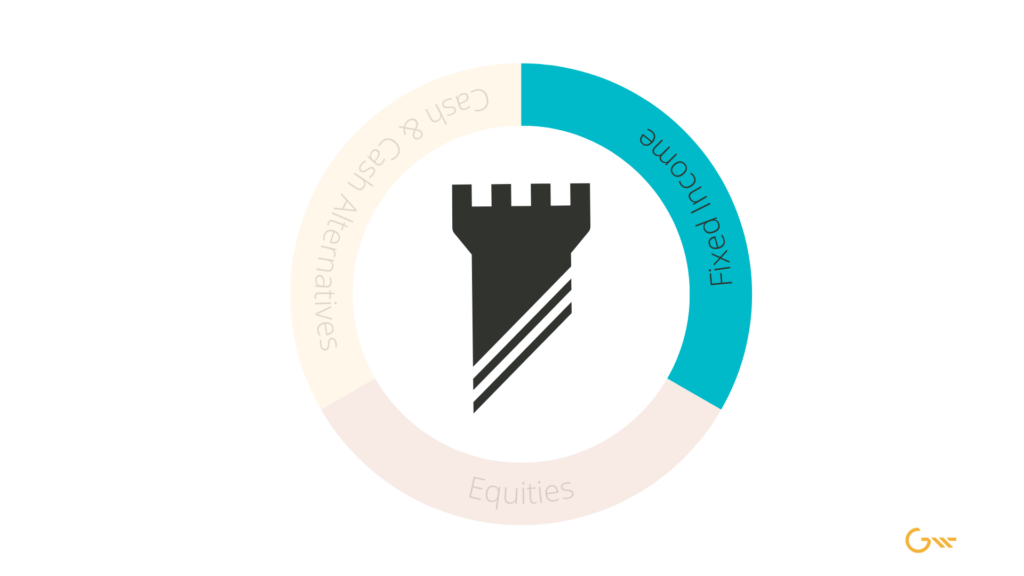
Moat Ring 2: Fixed Income. Five to eight years of high-quality bonds provided less volatility with stable income. A second wall of defense while equities took the hit.
Moat Ring 3: Equities. Long-term growth capital with a 7 to 10+ year horizon. Because no one was relying on these funds for near-term needs, they could ride the storm and capture the rebound.
But here’s what made the difference: we didn’t just defend. We attacked.
On April 7, 2025, one day before the market bottomed, Chris Arends and the Gatewood Investment Committee sent guidance to every advisor on the team:
“Please contact clients with dry powder and suggest investing 1/2 to strategy now. Dry powder means funds not earmarked for short-term or mid-term spending needs. It must be long-term (>7 years).”
— Chris Arends, Gatewood Investment Committee, April 7, 2025 at 8:47 AM
That’s not a memo written in hindsight. That’s real-time guidance, issued the morning before the market hit its lowest point.
Dry powder means long-term capital not earmarked for short-term or mid-term spending. Funds with a 7+ year horizon. Because Moat Rings 1 and 2 were fully funded, we knew exactly which dollars could go to work at depressed prices, and we deployed them with conviction.
As our investment partner, Aaron Tuttle, said that same morning:
“Since 1957, we’ve had 12 corrections in the S&P 500 greater than 20%. Half were between 20-30%, three were between 30-40%, and three were greater than 40%. If you have a lot of cash, don’t overcomplicate it. Invest half now, another quarter at a 30% drop, and go all-in, buying everything you can at a greater than 40% drop. You might only get one or two opportunities at that level in your lifetime.”
Other investors were frozen. Ours were buying.
That’s the power of a fortress.
The Bigger Picture
The 2025 correction joins a pattern every investor should know by heart:
Market Event
Decline
Recovery Time
Dot-Com Crash (2000–2002)
-49.1%
7.2 Years
Global Financial Crisis (2007–2009)
-56.8%
5.5 Years
COVID-19 Crash (2020)
-34%
~6 Months
2022 Bear Market
-27.5%
~2 Years
2025 Tariff Correction
~19%
~4 Months
Every single one felt like the end of the world. Every single one recovered. Every single time, the investors who stayed disciplined won.
But Here’s What Should Keep You Up at Night
“The biggest risks are always the ones nobody sees coming. The events that aren’t on anyone’s radar are what move the world most. People are generally good at predicting the future except for the surprises that actually matter.”
— Morgan Housel, Same as Ever
The 2025 correction was the easy version. No recession. Strong consumer spending. Resilient corporate earnings. Room for the Fed to cut rates. The economy absorbed the shock and bounced back in months. V-shaped recovery!
That won’t always be the case.
When we study the last 50 years of S&P 500 bear markets, the data is clear: the presence or absence of a recession changes everything.
Bear Markets Without a Recession (1987, 2022)
Metric
Average
Decline
-30%
Peak to Trough
~6.5 months
Full Round Trip
~23.5 months (~2 years)
Bear Markets With a Recession (1980–82, Dot-Com, GFC, COVID)
Metric
Average
Decline
-42%
Peak to Trough
~17.5 months
Full Round Trip
~46 months (~3.8 years)
Recessionary bears are 12 percentage points deeper. The decline phase is 3x longer. The total round trip takes twice as long.
And if you exclude the anomalous COVID recovery (compressed by unprecedented government intervention), the three traditional recessionary bears averaged about 5 years from peak to recovery.
Since 1975, four out of six bear markets have coincided with recessions. We are statistically due for another one. The question isn’t if. It’s when.
Are you building your fortress now, while the sun is shining? Or will you try to build it in the middle of the storm?
The Danger of All-Time Highs: Complacency
Here’s the part most people don’t want to hear: all-time highs are when fortresses get built, not when they get tested.
Right now, with markets at record levels and three straight years of strong returns behind us, it’s tempting to relax. To assume the good times will continue indefinitely. To skip the disciplined work of maintaining cash reserves and rebalancing into fixed income.
But the 2025 correction is a reminder that the next downturn doesn’t send a calendar invite. It shows up unannounced, sometimes triggered by a single speech in a Rose Garden.
With the S&P 500 near 7,000 and all-time highs stacking up, most investors are relaxed. We’re not.
We’re using this moment of strength to prepare for the next moment of weakness:
Reviewing cash positions to make sure every client has their full 2-year liquidity buffer
Rebalancing into fixed income to lock in yields and maintain the 5 to 8 year spending bridge
Harvesting equity gains to fund and strengthen the outer moat rings
Stress-testing every plan against recessionary scenarios: 40%+ drawdowns, multi-year recoveries, rising unemployment
We’re not predicting a crash. We never do. We’re preparing for one, because that’s what we always do.
The Firm to Family™ Advantage: Why the Fortress Held
Zero panic selling across our entire client base is not an accident. It’s the result of how Gatewood is built.
At most firms, the investment team doesn’t talk to the financial planner. The financial planner doesn’t talk to the tax advisor. And nobody coordinates the message to the client when markets are in freefall.
At Gatewood, our Firm to Family™ structure means every professional who touches your financial life is working from the same plan, communicating continuously, and aligned on the same strategy.
When markets dropped in April, your wealth planner could tell you with precision how many months of expenses were covered without touching a single equity position. The Investment Committee was providing real-time guidance on deploying dry powder. And the planning team was tracking the tax implications of every move to make sure nothing was done without considering the full picture.
Our clients didn’t panic because they didn’t have to. They had a plan, a team, and a fortress. And they heard from their advisor, personally, before the bottom even arrived.
The 2025 correction proved the Fortress Gatewood system works. Our clients didn’t panic. They didn’t sell. They didn’t miss the recovery. Zero families. Zero panic sales. Many of them used the downturn to buy at depressed prices and came out stronger on the other side.
But the next test might not be a four-month correction. It could be a recessionary bear market that grinds on for years. The families who navigate that with confidence will be the ones who built their fortress today, while markets were strong and emotions were calm.
Don’t wait for the storm to start digging the moat.
Important Disclosures
Content in this material is for general information only and not intended to provide specific advice or recommendations for any individual. Gatewood Wealth Solutions and LPL Financial do not provide legal or tax advice or services.
All investing involves risk including loss of principal. No strategy assures success or protects against loss.
The opinions voiced in this material are for general information only and are not intended to provide specific advice or recommendations for any individual. All performance referenced is historical and is no guarantee of future results. All indices are unmanaged and may not be invested into directly.
This information is not intended to be a substitute for specific individualized tax or legal advice. We suggest that you discuss your specific situation with a qualified tax or legal advisor.
Bonds are subject to market and interest rate risk if sold prior to maturity. Bond values will decline as interest rates rise and bonds are subject to availability and change in price.
The S&P 500 Index is a capitalization-weighted index of 500 stocks designed to measure performance of the broad domestic economy through changes in the aggregate market value of 500 stocks representing all major industries.
Appendix: Sources
S&P 500 Historical Data & 2025 Market Correction
S&P Dow Jones Indices. S&P 500 historical closing prices.
“2025 Stock Market Crash.”
NBC News. “S&P 500 Hits an All-Time High—Rebounding to Its Level When Trump’s Second Term Began.” June 27, 2025.
CBS News. “The Stock Market Is Nearing a Record High After Cratering in April. Here’s Why.” June 27, 2025.
“How the Stock Market Made Back All Its Losses After Trump Escalated the Trade War.” May 4, 2025.
CNN Business. “What to Expect From Stocks in 2026.” January 1, 2026.
S. Bank. “Stock Market Under the Trump Administration.” Updated February 4, 2026.
Trading Economics. “United States Stock Market Index.” February 10, 2026.
Bank for International Settlements. “Understanding the Swift Market Recovery After the April 2025 Tariff Shock.”BIS Quarterly Review, September 2025.
April 2025 Tariff Crash Details
CNN Business. “Dow Plunges 2,200 Points as Tariff Tumult Rocks Markets.” April 4, 2025.
“Tariff Shock: Top S&P 500 Winners and Losers (April 2–16, 2025).”
Bear Market Historical Data & Recession Analysis
S&P 500 bear market peak-to-trough and recovery data, 1975–2025.
S&P 500 historical performance and earnings data.
National Bureau of Economic Research (NBER). S. business cycle expansions and contractions.
“A History of Bear Markets.”
“A History of Stock Market Percentage Declines (15% to 50%).”
“Here’s How Often Stocks Dip 5% or More.”
Austin Wealth Management. “Dealing With the Dips.”
2026 Market Outlook & Valuation
The Motley Fool. “With the S&P 500 at an All-Time High to Start 2026, Is It Smart to Buy Stocks?” January 9, 2026.
The Motley Fool. “History Says a Turning Point Is Likely Coming for the S&P 500 in 2026.” January 1, 2026.
Visual Capitalist. “152 Years of S&P 500 Returns (and Predictions for 2026).” January 2026.
Advisor Perspectives. “S&P 500 Snapshot: Index Closes at Record High.” January 2, 2026.
Books Cited
Housel, Morgan. Same as Ever: A Guide to What Never Changes. Portfolio/Penguin, 2023.
Understanding the New Children’s Investment Accounts Launching in 2026
Every parent dreams of giving their children a head start in life. Starting in 2026, a new federal program will do exactly that—and thanks to an extraordinary $6.25 billion pledge from Michael and Susan Dell, the gift just got bigger.
Here’s what makes this program remarkable: If you have children age 10 or under, they may automatically receive up to $1,250 in free investment capital—$1,000 from the government plus $250 from the Dell Foundation. No action required beyond enrollment. For a family with two eligible children, that’s $2,500 invested in their future at no cost to you.
The question isn’t whether to accept this gift—it’s whether these “Trump Accounts” make sense as part of your broader savings strategy for your children.
What These Accounts Are Called
These accounts are commonly known as “Trump Accounts” or “Children’s Investment Accounts.” They’re formally defined in Section 530A of the One Big Beautiful Bill Act and are sometimes referenced as “530A accounts” in tax documentation.
Official Website: All program and enrollment information will be published at trumpaccounts.gov
Program Timeline
Spring 2026: Families can begin enrolling by filing IRS Form 4547 with their tax returns or through other designated methods.
Mid-2026: Online enrollment portal launches at trumpaccounts.gov.
July 4, 2026: The program formally launches with seed deposits funded, contributions enabled, and full account access available.
How Trump Accounts Work – The Basics
Eligibility
Any U.S. citizen under age 18 with a Social Security number can have an account opened on their behalf. Children born between 2025 and 2028 automatically receive a $1,000 government-funded seed deposit.
The Dell Foundation Gift
The Dell family’s $6.25 billion contribution provides an additional $250 to eligible children who meet specific criteria: age 10 and under, born before January 1, 2025, and living in ZIP codes with median household incomes of $150,000 or less. This enhancement reaches approximately 25 million children across roughly 75% of U.S. ZIP codes.
Annual Contributions
Families may contribute up to $5,000 per year per child, including employer contributions. Employers may contribute up to $2,500, which counts toward the $5,000 annual cap. Philanthropic enhancements like the Dell gift are separate and don’t count against contribution limits.
Investment Requirements
All funds must be invested in low-cost, broad U.S. equity index funds designated by the Treasury Department. Annual fees are capped at 0.1%. Accounts are initially established through the Treasury and can later be transferred to approved private financial institutions.
The Critical Detail: What Happens to the Tax Treatment
Understanding the tax treatment matters because it affects whether you should add your own money to these accounts or use other vehicles instead. Think of it in two phases:
PHASE 1: Before Age 18 (The Accumulation Phase)
During childhood, contributions are made with after-tax dollars, and investment growth accumulates tax-deferred. Parents or guardians maintain control of the account during this period. This phase is straightforward.
PHASE 2: After Age 18 (The IRA Conversion Phase)
At age 18, Trump Accounts automatically convert to traditional IRAs. This conversion fundamentally changes how the account functions:
Access and Control: The young adult gains full control as the account becomes a traditional IRA in their name.
Withdrawals and Taxes: This is where it gets important. Distributions are taxed as ordinary income on all earnings and growth (though your original contributions come back tax-free). Additionally, the 10% early withdrawal penalty applies to distributions before age 59½.
The Exception Rules:
The 10% penalty (not the taxes) can be waived for:
First-time home purchases (up to $10,000)
Qualified education expenses
Business startup costs in certain circumstances
Here’s the crucial point many families miss: These “qualified expenses” only waive the 10% penalty—they do NOT eliminate the ordinary income tax on the earnings. Even when funding college or buying a first home, you’ll owe income tax on all the growth.
Investment Flexibility: After conversion, the account can be invested more broadly according to traditional IRA rules, no longer restricted to designated index funds.
Why This Matters: This automatic conversion to a traditional IRA means families should carefully consider whether contributing their own funds makes sense compared to other savings vehicles like 529 plans (where qualified education withdrawals are completely tax-free) or custodial accounts (where flexibility is greater).
Comparing Your Options: Trump Accounts vs. 529 Plans vs. UTMA Accounts
We believe informed decisions come from clear comparisons. Here’s how Trump Accounts stack up against the savings vehicles you may already be using:
Trump Accounts offer a $1,000 government seed deposit (for children born between 2025 and 2028) plus potential philanthropic enhancements like the Dell gift. The $5,000 annual contribution limit includes employer contributions. Investment growth is tax-deferred, and the account converts to a traditional IRA at age 18. Withdrawals after 18 are taxed as ordinary income with standard IRA penalties and exceptions applying. The parent controls the account until age 18, then the child gains full access.
529 Plans have no government seed funding but offer no annual contribution limits (though lifetime caps apply by state). Contributions may be deductible at the state level. Investment growth is completely tax-free when used for qualified education expenses. Withdrawals for education are entirely tax-free, while non-education withdrawals face taxes and penalties. The account owner retains control indefinitely and can change beneficiaries.
UTMA Accounts offer no government funding and no annual limits beyond gift tax considerations. There are no tax deductions for contributions. Investment growth is taxable annually, and the kiddie tax may apply. Withdrawals can be used for any purpose benefiting the child with no special tax treatment or penalties. The child gains full, unrestricted control at age 18 to 21 (depending on state), and investment options are highly flexible.
The Bottom Line: The right choice depends entirely on your family’s priorities and timeline—which is exactly the kind of conversation we help clients navigate.
Our Perspective: When Trump Accounts Make Sense
At Gatewood, we believe in giving you straight talk about financial products—even new, politically branded ones. Here’s our professional perspective:
The free money is a no-brainer. If your child qualifies for the government seed and Dell enhancement, opening an account is essentially accepting a gift. We’d help every eligible family capture this benefit.
Your own contributions require more thought. For most families focused on education funding, 529 plans deliver better tax outcomes. The Trump Account’s conversion to an IRA at 18 means you’ll pay ordinary income tax on withdrawals—even for education. That’s objectively less attractive than a 529’s completely tax-free treatment for qualified education expenses.
But there are scenarios where these accounts shine:
You’re already maxing out 529 contributions and want additional tax-advantaged savings
Your priority is very long-term wealth building (retirement savings starting at birth)
You’re specifically targeting a first home down payment for your child
You want to diversify across multiple savings vehicles with different tax treatments
Remember that implementation details are still evolving. The IRS continues to issue guidance on program specifics, and some questions remain unanswered as of December 2025.
The key question isn’t “Are Trump Accounts good or bad?” It’s “Are they right for YOUR family’s specific goals and timeline?”
The Bigger Picture: Why This Program Was Created
This program reflects a simple idea: giving young Americans an ownership stake in the economy early can transform how they think about money, investing, and wealth-building. The policy goals include expanding equity ownership across economic classes, supplementing Social Security with private savings, and creating what policymakers call a “shareholder economy.”
Whether this achieves its lofty policy goals remains to be seen—but for individual families, the opportunity to capture free seed capital and teach children about investing is very real and tangible.
Treasury officials emphasize these accounts are designed to supplement, not replace, Social Security and other safety net programs. The long-term vision is to empower a generation with real assets, investment experience, and an ownership mindset from day one.
How Gatewood Can Help
This program launches in mid-2026, which gives us time to think strategically together. Our process focuses on three essential questions:
Does your family qualify for the maximum benefits, including the Dell enhancement?
Should you contribute your own funds, or does a 529 or custodial account better serve your goals?
How does this fit into your broader wealth-building strategy for your children’s future?
We excel at these nuanced conversations—the kind where “it depends” actually becomes “here’s exactly what makes sense for you.” This isn’t about selling you on Trump Accounts. It’s about ensuring you make the most informed choice for your family’s unique situation.
Ready to discuss your family’s strategy?
Important Considerations
This program is new, and IRS regulations continue to evolve. The information provided here reflects program details as understood in December 2025, but specific rules and procedures may change as implementation progresses. Investment returns are not guaranteed, and tax laws may change. This material is educational and not a recommendation for any specific action.
For personalized guidance on whether Trump Accounts make sense for your family, we encourage you to consult with a financial advisor and tax professional who can evaluate your complete financial picture.
Important Disclosures
Securities and advisory services are offered through LPL Financial, a registered investment advisor and broker-dealer (member FINRA/SIPC).
The opinions voiced in this material are for general information only and are not intended to provide specific advice or recommendations for any individual.
Gatewood and LPL Financial are separate entities. Gatewood Wealth Solutions does not provide legal or tax advice directly. However, Gatewood Tax & Accounting, a separate entity under the Gatewood family of companies, provides comprehensive tax planning and preparation services. For legal matters, you should consult your legal advisor regarding your personal situation. Our team coordinates closely with clients’ tax and legal professionals to help ensure comprehensive planning.
Contributions to a traditional IRA may be tax deductible in the contribution year, with current income tax due at withdrawal. Withdrawals prior to age 59 ½ may result in a 10% IRS penalty tax in addition to current income tax.
This information is not intended to be a substitute for individualized tax advice. We suggest that you discuss your specific tax situation with a qualified tax advisor.
Prior to investing in a 529 Plan investors should consider whether the investor’s or designated beneficiary’s home state offers any state tax or other state benefits such as financial aid, scholarship funds, and protection from creditors that are only available for investments in such state’s qualified tuition program. Withdrawals used for qualified expenses are federally tax free. Tax treatment at the state level may vary. Please consult with your tax advisor before investing.
In the financial world, there’s a certain type of advisor you want to avoid at all costs: the Fake Fiduciary. They might dress the part, speak the lingo, and even call themselves a “fiduciary,” but behind the scenes they’re stuck in the past—selfishly peddling high-commission products, hiding critical conflicts of interest, and prioritizing their paycheck over your best interests.
In the old days, commission-driven sales models were standard. But the industry has evolved and we are decisively in the modern era of true fiduciary financial advice. True fiduciary advisors aren’t selling a product; they’re delivering personalized advice, backed by a legal and ethical obligation to put the client’s interest first. Fake Fiduciaries? They’re still clinging to the sales playbook of the 1980s.
How to Spot a Fake Fiduciary
Follow the Money: Ask how they’re compensated. If commissions are a big part of the answer, red flag.
Check Transparency: A real fiduciary is open about fees, process, and conflicts of interest. No dodging allowed.
Listen to the Pitch: If it sounds more like a sales presentation than a strategy discussion, you know what you’re dealing with.
Check FINRA’s BrokerCheck and the SEC’s Investment Advisor Public Disclosure Website: Conduct a quick background check to look for red flags prior to trusting any advisor with your investments.
Trust Your Gut: If something on an instinctual level does not feel right, run! We have clients who were swindled by Bernie Madoff, who wish they had done so.
How Gatewood Does It Differently: The Fake Fiduciary Antidote
We’ve built Gatewood Wealth Solutions to be everything a Fake Fiduciary is not. Here’s how:
1. Industry-leading Fee Transparency
Our fee schedule is public, and we even provide a fee calculator so clients can see exactly what they’ll pay (HERE).
Our client app even shows the total fees paid for any time period our clients want to review.
2. Beyond the Legal Fiduciary Standard
We follow the highest ethical codes from the CFA Institute and CFP Board—not just the legal, contractual minimum.
3. Salaried Advisors
Our advisors are salaried, removing any incentive to sell products for personal gain.
We’ve built a career path from intern to partner that rewards long-term client care, not short-term sales wins.
4. Customized Investment Decisions
The Gatewood Investment Committee is agnostic to fund companies when selecting investments.
We receive no kickbacks and have no entangling alliances with any investment fund provider.
5. A Culture of Always Doing the Right Thing
Our guiding principle: always do the right thing.
This isn’t new—our founder’s early client letter to my own parents (prior even to my tenure with the firm) proves it’s been in our DNA from day one.
At Gatewood, we’re not just fiduciaries—we’re your long-term partners in building enduring wealth with purpose. No gimmicks, no hidden agendas, and no fake fiduciary practices.
In other words, at Gatewood, we’re the antidote to the Fake Fiduciary. We focus on transparency, ethics, and a client-first culture that ensures you’re always getting the best advice, free from hidden agendas. And that’s how we do things differently.
If you’re ready to experience the Gatewood way for yourself, we’d love to chat. We’re excited to show you what true fiduciary care looks like!
Important Disclosures:
Information and interactive calculators are made available to you as self-help tools for your independent use and are not intended to provide investment, tax, or legal advice. We cannot and do not guarantee their applicability or accuracy in regards to your individual circumstances. All examples are hypothetical and are for illustrative purposes. We encourage you to seek personalized advice from qualified professionals regarding all personal finance issues.
The 10 Reasons Why People Hire a Gatewood Advisor
When considering a financial advisor, clients typically interview just one or two firms. At Gatewood Wealth Solutions, we recognize the importance of making a lasting first impression that aligns with our clients’ core values and expectations. Inspired by insights from financial expert Michael Kitces and Morningstar’s 2023 study “Why Do People Hire Their Financial Advisors?”¹ we’ve refined the top ten reasons our clients choose Gatewood:
Emotional Drivers
Trust & Integrity
Trust forms the foundation of every advisory relationship. At Gatewood, we prioritize transparency and fiduciary responsibility, aiming to ensure our clients feel secure knowing we always place their best interests first.
“The values-driven team of Gatewood Wealth Solutions is motivated, caring, highly competent and personally fueled by character and integrity.” — Dave M., Corporate Executive
Clear and Consistent Communication
We simplify complex financial concepts and maintain proactive communication. Our advisors listen deeply and seek to ensure clients always understand and feel heard throughout their financial journey.
Relief from Financial Anxiety
Managing finances alone can be overwhelming. Gatewood advisors provide confidence by taking the burden of financial complexity off clients’ shoulders, guiding them confidently toward their goals.
“Their unwavering support made a world of difference during such a challenging time. I am profoundly grateful for all they’ve done and continue to do for me.” — Carol S., Corporate Executive 09.20.23*
Financial Expertise
Personalized Investment Guidance
Gatewood offers customized investment advice meticulously aligned with our clients’ long-term objectives, so that decisions are based solely on clients’ best interests and not outside incentives.
“Gatewood Wealth Solutions gives me confidence that my retirement savings are being monitored and managed with MY best interest in mind.” — Gary B., Corporate Executive 09.27.23*
Specialized Problem-Solving
Our advisors are equipped to handle specific financial challenges such as tax optimization, retirement income planning, and estate management. We tailor each solution to address unique client circumstances effectively.
“Their planning services are comprehensive and consider all assets of our family, not just what they manage.” — Tim M., Partner/Attorney 09.22.23*
Proactive Strategic Planning
Life changes rapidly, and Gatewood advisors remain ahead of market cycles, income variations, and unexpected life events, proactively preparing clients to navigate and capitalize on these changes.
Situational Advantages
Personalized, Holistic Financial Plans
At Gatewood, financial planning extends beyond just numbers. We integrate our clients’ personal values, life stages, and aspirations into comprehensive strategies that align financial decisions with life goals.
“The Gatewood team developed an integrated financial and retirement plan that we refined together. I’m pleased to say we are well ahead on our plan!” — Phil P., Retired Corporate Executive 09.20.23*
Local Accessibility and Engagement
With our established presence in St. Louis, Gatewood clients benefit from direct access and face-to-face interactions. Our local roots and active community involvement offer reassurance and familiarity. For clients in the 30+ states outside of the St. Louis Metro Area, we frequently travel for in-person visits.
Tangible Quick Wins
We demonstrate value early by providing immediate, actionable insights and measurable results. Gatewood clients frequently experience beneficial outcomes quickly, reinforcing their decision to partner with us.
Real-Life Client Success Stories
Prospective clients appreciate authentic stories from those who’ve experienced our commitment firsthand. At Gatewood, we regularly share testimonials and case studies illustrating our dedication to client success, fostering confidence before the relationship even begins.
“As Pam and I navigate these retiring years, she and I both derive a rich sense of security knowing that John and the team at Gatewood Wealth Solutions will continue to surround and support her for as long as needed.” — Steve K., Retired Corporate Executive 09.27.23*
At Gatewood Wealth Solutions, our advisors may not address every potential motivator—but we passionately deliver on the ones that align most closely with our clients’ values: trust, clear communication, personalized strategies, and local, accessible expertise. These core areas define why our clients not only choose us initially but remain committed partners for life.
Sources:
¹Morningstar 2023, “Why Do People Hire Their Financial Advisors?” via Kitces
Important Disclosures:
*The statements provided are testimonials by clients of the financial professional as of 7/22/2025. The clients listed have not been paid or received any other compensation for making these statements. As a result, the client does not receive any material incentives or benefits for providing the testimonial. These views may not be representative of the views of other clients and are not indicative of future performance or success.
There’s a glaring contradiction in today’s economic discourse, and it clouds the investment outlook. The loudest voices warning about America’s unsustainable federal deficit are often the most reflexive critics of tariffs, an essential tool that could help address the crisis. They demand “fiscal responsibility” but fall silent when asked what they’d cut from the budget. Suggest entitlement reform, and they’ll tell you it’s political suicide. Propose higher income taxes, and they bristle at the economic drag. Ask how they’d raise $2.0 to $2.8 trillion annually to close the federal budget gap, and the conversation ends.
That’s why tariffs—unfashionable, imperfect, and deeply misunderstood—may be one of the only practical tools left that can meaningfully address the deficit until the country is ready for major changes to how the government collects revenue and spends.
D.O.G.E. Promised a Trillion-Dollar Fix. It Delivered a Rounding Error.
The Department of Government Efficiency (D.O.G.E.) was supposed to be the bold solution to government waste. Originally pitched as a vehicle for cutting $1 trillion in inefficiencies, the agency—backed by Elon Musk and restructured under President Trump—quickly revised expectations downward to $150 billion. D.O.G.E. operates as a consultant would, examining costs and structure and recommending changes to achieve efficiencies across various departments.
D.O.G.E. impact is a subject of some debate. As of mid-2025, D.O.G.E. has claimed between $150 billion and $ 90 billion in savings, although independent audits dispute much of that figure. More troubling, aggressive cuts to revenue-generating agencies like the IRS reduced government income. By some estimates, DOGE’s efforts may have cost taxpayers $135 billion through re-hires, overtime, legal settlements, and lost tax collections.
While well-intentioned and fundamentally a good idea, the shortfall was a strategic failure that exposed the limits of the “cut spending” approach. D.O.G.E. aimed to trim fat but ended up delivering a rounding error instead of transformational change.
Growth Alone Won’t Save Us
With a less-than-spectacular D.O.G.E. impact, and large Government spending cuts off the table — at least for now — the bipartisan default in Washington has long been to grow the economy and let increased tax receipts shrink the deficit as a percentage of GDP over time. It’s an appealing theory that consistently fails in practice. Despite periods of strong GDP growth, federal spending continues to outpace revenue by unprecedented margins.
While the growth strategy is politically palatable and will help over time, the U.S.’s current fiscal situation, with annual deficits of over $2 trillion, is dire. We don’t have the luxury of waiting for growth to solve a crisis that compounds daily. Growth matters, but it’s not enough. We need substantial revenue, and we need it soon.
Understanding Tariffs: A Tax, Not Inflation
Let’s address the elephant in the room: tariffs are, in fact, a tax. But they are emphatically not inflation.
Inflation is a monetary phenomenon—the expansion of the money supply that dilutes currency value and drives broad-based price increases. Tariffs don’t expand the money supply or devalue the dollar. They are a targeted consumption tax applied to imported goods, with three key differences from domestic taxes:
Revenue generation: Unlike inflation, tariffs generate federal government revenue, potentially $300 billion annually
Targeted impact: They affect specific imported goods rather than the entire economy. Imports are roughly 15% of the U.S.’s GDP today.
Importer and Corporate absorption possibility: Who absorbs the cost increase from U.S. tariffs is an interesting and complex question, with the absorbing party differing by item and by importer. With energy costs roughly 10% lower than two years ago, many corporations have absorbed most of the tariff costs rather than passing them through
Despite persistent warnings from economists, tariffs have not triggered the runaway inflation they predicted.
The Hidden Costs of Corporate Absorption
However, when corporations absorb tariff costs, the economic impact doesn’t simply disappear—it gets redistributed. Companies facing compressed profit margins from tariff absorption experience a cascade of effects that ultimately flow back to the broader economy:
Reduced profit margins lead to lower corporate earnings, which translate to decreased stock valuations. This creates a diminished wealth effect as portfolio values decline, prompting consumers to reduce spending. Meanwhile, lower capital gains tax revenue partially offsets the government’s gains in tariff income.
This redistribution means that while tariffs may not be directly reflected in consumer prices, their costs still flow through the economy via financial markets and reduced economic activity.
The Regressive Reality of “Targeted” Impact
While tariffs don’t affect every sector equally, describing their impact as merely “targeted” obscures an important truth: if passed through, they disproportionately burden lower-income households. These families spend a higher percentage of their income on goods (versus services), have less flexibility to substitute away from imported products, and are more price-sensitive to increases in everyday items.
This regressive effect means that tariffs could function as a consumption tax that hits hardest those least able to absorb the cost—a significant trade-off that must be weighed against their revenue-generating potential. Kitchen table economics won 2024 for the Republicans, but it could be the reason they lose the 2026 midterm elections.
Why Income Tax Hikes Hit a Wall
One truism of taxes: Anything you tax, you get less of. That reflects human behavior and rational economic actors. Raising income taxes sounds straightforward until you encounter the Laffer Curve’s hard ceiling. Beyond a certain point, higher rates reduce total tax revenue by discouraging work, saving, and investment. Historical data suggests we may already be approaching that point, considering total income taxes collected rose when Trump dropped rates in his first administration.
The federal government’s share of GDP rarely exceeds 20%, regardless of marginal tax rates. Taxing productivity has diminishing returns and penalizes the very economic activity we need to encourage. Tariffs, conversely, are harder to avoid and don’t punish domestic output. For revenue generation with minimal collateral damage to productivity, tariffs offer a superior approach, though they come with their own distributional consequences.
Tariffs as Statecraft: Economic Leverage Without Bloodshed
One of tariffs’ most under appreciated benefits is their geopolitical utility. Unlike sanctions or military action, tariffs exert pressure with fewer human costs and less international conflict.
Consider Canada’s Digital Services Tax proposal earlier this year, which targeted U.S. tech firms. The Trump campaign’s swift threat of retaliatory tariffs prompted Canada to reverse course within days. No troops, no diplomatic standoff—just credible economic pressure accomplishing what traditional diplomacy might have taken months to achieve.
In an increasingly multipolar world where military intervention grows costlier and less popular, tariffs represent a powerful, non-violent tool of statecraft.
The Mainstream Economics Blind Spot
The loudest tariff opposition comes from economists who forecasted a Great Depression during COVID, predicted inflation was “transitory,” and missed nearly every major market rebound of the past five years. Now they’re warning of recession if tariffs increase.
Perhaps they’re right this time. But their track record suggests their models are shaped more by ideological assumptions than empirical evidence. As investors and fiduciaries, we must remain disciplined and objective, recognizing that markets rise under both Democratic and Republican administrations because innovation and capitalism transcend partisan politics.
A Nuanced Approach: Targeted Implementation
Smart tariff policy requires acknowledging both benefits and drawbacks. The mainstream economic consensus identifies legitimate concerns: tariffs can raise consumer prices, potentially trigger trade wars, and may reduce competitive pressure on domestic industries.
The solution isn’t to abandon tariffs but to implement them strategically:
Who are the most inelastic exporters?
What option do they have? Early returns on inflation and the “Liberation Day” April 2, 2025, tariffs reveal higher government revenues and little to no increased inflation or inflation expectations. This result goes against conventional economic groupthink and needs further exploration. One idea is that exporters where trade deficits are large and long running are “inelastic” and as a result have little recourse but to absorb the tariffs if they wish to continue their export volumes.
Target critical industries:
Focus on sectors vital to national security—steel, defense, critical minerals, and advanced manufacturing—rather than blanket applications that raise consumer costs across the board. Tariffs have an additional “incentive impact,” where importers may choose to build plants and manufacture in the U.S., thereby avoiding the tariff cost altogether. This is not a simple calculation for these importers as U.S. production costs could be higher, negating the profitability improvement from moving production to the U.S..
Use as negotiation tools: Follow the US-China Phase One trade deal model, leveraging tariffs to secure better terms while avoiding long-term economic fallout.
Maintain policy clarity: Rapid shifts create business uncertainty that kills investment. Clear, consistent policies allow markets to adapt and plan accordingly.
Match unfair practices: When trading partners engage in dumping or subsidization, targeted tariffs can level the playing field without escalating broader tensions.
Open new markets to U.S. exporters: One of the goals of recent tariff policy has been to open up agricultural markets to U.S. exporters, and this could have a beneficial impact on U.S. agricultural producers and exporters.
The Implementation Gap
However, a significant disconnect appears to exist between this strategic approach and current practice. The administration has largely deployed blanket tariffs across broad categories, including items that the U.S. cannot efficiently produce domestically, such as coffee, bananas, and numerous other products. This approach is a shock-and-awe approach to international trade, and if the intent was to draw everyone’s attention to this issue, the approach succeeded. Unfortunately, this approach creates exactly the problems that strategic implementation could avoid: higher consumer prices on necessities, economic inefficiency from protecting non-strategic industries, and diplomatic tensions without clear negotiating objectives.
This gap between theory and practice undermines many of the arguments in favor of tariffs. The current approach resembles less a surgical instrument and more a blunt tool, impacting the U.S. investment landscape as we saw in the April-May timeframe and making it harder to achieve the revenue and strategic benefits while minimizing economic disruption.
Trump 2.0: Tariffs as Economic Policy
In his first term, Trump deployed tariffs more surgically, targeting China, steel, and automotive sectors. In his second term, tariffs are expected to anchor his economic strategy alongside tax cuts, deregulation, and energy dominance.
The Trump approach may be unpredictable, but it’s not irrational. His focus on significantly altering the terms of U.S. trade across all trading partners can provide near-term economic growth. The mixed stock market performance that we have seen since April 2 creates a dynamic that appears to be high risk, high reward in terms of effective policy implementation. Tariffs can help the Trump administration achieve its objectives. Trump seeks a legacy of bringing industries back to the U.S., delivering on his promises of higher real wages to blue-collar workers, resulting in a booming economy. The question is how far he can take this fundamental restructuring of U.S. trade relations without incurring significant international and domestic opposition.,
Markets Recover From Tariff Shocks
History offers a perspective on tariff-related market volatility. In April 2025, markets dropped 19% on tariff news—eerily similar to December 2018’s 19% decline over trade tensions. In both cases, markets recovered as investors recognized the temporary nature of the disruption. Both recoveries were swift once investors had better visibility into the impact and scope of the tariffs on industries and trading partners.
This pattern suggests markets can adapt to tariff policies more readily than economists predict, especially when those policies generate tangible economic benefits. The chart speaks for itself:
I am proud of the Gatewood Investment Committee and its successful navigation of the market correction this year. On the morning of April 7th, when the market was at its low point for 2025 (easy to see this in hindsight, hard at the time), our CEO said the following to our advisors at our Monday morning all-hands meeting:
“I would keep some powder dry. Since 1957, we’ve had 12 corrections in the S&P 500 greater than 20%. Assuming we’re in a bear market now, half of them were between 20-30%, three were between 30-40%, and another three were greater than 40%. If you have a lot of cash, don’t overcomplicate it. Invest half now, another quarter at a 30% drop, and go all-in, buying everything you can at a greater than 40% drop. You might only get one or two opportunities at that level in your lifetime.”
Since April 7th, the S&P 500 has risen by over +25%. Our clients are the beneficiaries of our continued commitment to long-term, methodical investing on their behalf. That’s the Gatewood way.
The Bottom Line: Tariffs May be the Only Tool We Have Left
We can’t cut our way out of this deficit at least for now, D.O.G.E. proved that. We can’t tax our way out through income taxes—the Laffer Curve won’t allow it. We can’t inflate our way out without destroying the currency. And while growth will certainly help, our fiscal situation requires exploration of all possible revenue sources.
That leaves tariffs as one of our most viable short-term options for meaningful deficit reduction until the country is ready for major changes to how the government collects revenue, what services it provides its citizens, and the cost of those services.
Tariffs have the potential to generate substantial revenue, though with significant distributional consequences. Tariffs create geopolitical leverage. Tariffs can strengthen strategic industries when properly targeted. The impact of tariffs may fall unequally on exporters, importers, nations, and consumers. They offer a possible path to start closing the deficit before it reaches crisis levels.
The key is honest acknowledgment of their costs and who absorbs these costs: the regressive burden on lower-income households if passed through, the hidden effects of corporate absorption flowing through financial markets, the impact on exporters and importers, and the critical importance of strategic rather than blanket implementation.
You don’t have to love tariffs to recognize their potential impact as a bridge solution until the country is ready for significant changes to how the government collects revenue and spends. At this point, they represent one of the only tools with a credible shot at improving our fiscal trajectory before time runs out, provided we implement them thoughtfully rather than as a blunt instrument.
The deficit is the fire. Tariffs are the hose. But we need to aim carefully, or we risk dousing the wrong things while the real problem continues to burn.
The opinions voiced in this material are for general information only and are not intended to provide specific advice or recommendations for any individual. All performance referenced is historical and is no guarantee of future results. All indices are unmanaged and may not be invested into directly.
Investing involves risk including loss of principal. No strategy assures success or protects against loss.
The economic forecasts set forth in this material may not develop as predicted and there can be no guarantee that strategies promoted will be successful.
This information is not intended to be a substitute for individualized tax advice. We suggest that you discuss your specific tax situation with a qualified tax advisor.
There is no guarantee that a diversified portfolio will enhance overall returns or outperform a non-diversified portfolio. Diversification does not protect against market risk.
The S&P 500 Index is a capitalization-weighted index of 500 stocks designed to measure performance of the broad domestic economy through changes in the aggregate market value of 500 stocks representing all major industries.
Investing isn’t one-size-fits-all. At Gatewood Wealth Solutions, we’ve built a tailored approach—The Gatewood Glide—designed to support investors through each stage of their financial journey, from early accumulation to meaningful legacy-building.
Phase 1: Cultivating – The Habit-Builder
Persona: Early-career professional (entry-level), often single, establishing money habits.
Primary Goals:
Develop solid financial habits.
Avoid debt; build credit responsibly.
Start investing and saving consistently.
Recommended Allocation:
Account Type
Allocation
401(k)
100% equities
Emergency Fund
3–6 months (cash in hub account)
Bonds
0%
Alternatives
0%
Planning Tips:
Embrace volatility. You have decades to ride out market fluctuations.
Prioritize aggressive growth potential (e.g., Total Market Index).
No fixed income needed yet—keep it simple and growth-oriented.
Phase 2: Building – The Growth-Engine Household
Persona: Dual-income couples, high earners, on track to wealth accumulation.
Primary Goals:
Maximize contributions to tax-advantaged retirement accounts.
Fund goals: home purchase, family, education.
Explore early wealth transfer or entrepreneurial opportunities.
Recommended Allocation:
Account Type
Allocation
401(k)
100% equities (maximize contributions)
Emergency Fund
6 months (dual-income) or 12 months (single-income)
Balance preservation, growth, and gifting efficiency carefully.
What Sets Gatewood Glide Apart?
The Gatewood Glidepath significantly diverges from traditional target-date funds. Here’s how:
Aggressive early equity exposure: Starting nearly fully invested in stocks (98%) seeking to maximize growth early on.
Higher equity at retirement: Maintains ~70% equity at retirement, significantly higher than the industry average (~50%), seeking to ensure ongoing portfolio growth potential.
Long-term growth-oriented approach: Treating retirement not as the end of growth, but as the start of a new investment horizon.
Final Thoughts: Why Gatewood Glide Matters
At Gatewood Wealth Solutions, our Glidepath isn’t just about reaching retirement—it’s about confidently soaring through it. By prioritizing growth through higher equity allocations, our goal is to enable our clients not just to retire, but to retire well—maintaining their lifestyles, preserving their purchasing power, and pursuing meaningful legacies.
In short, the Gatewood Glide is designed not just for longevity, but for prosperity.
Because retirement shouldn’t mean slowing down; it should mean continuing your ascent.
Ready to Glide?
Connect with our team to start your personalized journey toward financial clarity and confidence.
Important Disclosures:
The opinions voiced in this material are for general information only and are not intended to provide specific advice or recommendations for any individual.
Investing involves risk including loss of principal. No strategy assures success or protects against loss.
This information is not intended to be a substitute for individualized tax advice. We suggest that you discuss your specific tax situation with a qualified tax advisor.
There is no guarantee that a diversified portfolio will enhance overall returns or outperform a non-diversified portfolio. Diversification does not protect against market risk.
Alternative investments may not be suitable for all investors and should be considered as an investment for the risk capital portion of the investor’s portfolio. The strategies employed in the management of alternative investments may accelerate the velocity of potential losses.
Bonds are subject to market and interest rate risk if sold prior to maturity. Bond values will decline as interest rates rise. Bonds are subject to availability, change in price, call features and credit risk
The principal value of a target fund is not guaranteed at any time, including at the target date.
At Gatewood Wealth Solutions, wealth management extends beyond mere numbers—it’s about relationships, trust, and commitment that span generations. Our distinctive Firm to Family™ model isn’t just a slogan; it’s the foundation of how we deliver lasting value across generations.
A Team Built Around You
Unlike traditional models where clients are tethered to a single advisor, Gatewood provides an integrated team of professionals, each with a specific role:
Wealth Advisor: Your primary relationship manager, guiding significant financial decisions and ensuring your overall experience is seamless and attentive.
Wealth Planner: A Certified Financial Planner® responsible for crafting and continuously refining your personalized financial plan, directly aligned with your life goals.
Wealth Coordinator: The organizational anchor who manages administrative details, keeping your financial matters consistently organized and accessible.
Specialists: Extra support for your plan from experienced teammates with deep understanding of specialized and complex topics.
Expertise That Grows with You
Beyond the core Client Care Team, we have a team of specialists in investments, tax, business, and estate planning. These professionals collaborate behind the scenes to address the complexities that come with growing wealth.
Whether you’re navigating a liquidity event, transitioning into retirement, or preparing your estate plan, our in-house specialists at Gatewood team are already in place—ready to step in and support you. No matter your life stage or estate size, the right expertise is readily available.
This approach helps keep your financial strategy on track through life’s transitions and unexpected turns—so you can move forward with greater clarity and confidence.
Tailored Services for Every Stage
We recognize the uniqueness of each client’s financial landscape. Our Client Care Teams are structured to reflect your specific financial complexity:
Private Client Care: For ultra-high-net-worth individuals with complex, multifaceted financial needs.
Client Care Plus: Designed to support high-net-worth families requiring comprehensive, strategic financial management.
Client Care: Catering to clients with essential, yet crucial, financial planning needs.
By aligning our teams precisely with your financial circumstances, we ensure focused attention and optimal outcomes at every life stage.
The Firm to Family™ Advantage
Our Firm to Family™ approach means your relationship extends to the entire firm rather than depending solely on an individual advisor. This method provides:
Consistency: Your financial strategy remains stable and continuous, even if team members evolve.
Comprehensive Expertise: Immediate access to a collective wealth of knowledge from professionals who collaborate to serve your best interests.
Generational Relationships: We aim not just to serve you, but to support your family’s financial health across multiple generations, establishing a legacy of security and growth.
How We Differ from Traditional Advisors
Many wealth management firms operate on a “book of business” or “my client” model, where clients rely exclusively on one advisor for their financial planning. The advisor may fly under the banner of a big national brand, but in reality, that advisor acts as a one-man band.
This traditional approach can create vulnerabilities, particularly if the advisor moves firms, retires, or experiences life changes. At Gatewood Wealth Solutions, we embrace an “our clients” culture, ensuring your relationship is with our entire firm. This commitment means you enjoy seamless continuity, collective expertise, and personalized attention from our dedicated team, free from the disruptions often associated with traditional, advisor-dependent models.
Real Stories, Lasting Impact
Clients frequently highlight the tangible benefits of our comprehensive approach:
“Our relationship with Gatewood Wealth Solutions has evolved over the years right along with our family. From building and protecting our wealth to retirement and estate planning, Gatewood has guided us and enabled our objectives. It’s reassuring to know skilled professionals we trust are working with us to optimize what we have worked for all our lives¹.” — Dr. Boyd C., Retired Corporate Executive
A Client Story: The Parkers’ Journey from Overwhelmed to Empowered
Before partnering with Gatewood, the Parker family—two busy professionals with three children and aging parents—felt stretched thin. Despite solid earnings, they were unsure how to balance college savings, retirement planning, elder care responsibilities, and managing their growing portfolio. Their previous advisor provided only occasional updates and general guidance, leaving them uncertain and reactive.
After engaging Gatewood Wealth Solutions, everything changed. They were introduced to their dedicated Client Care Team, including a Wealth Advisor who listened closely to their goals, a Wealth Planner who developed a dynamic, goal-driven plan, and a Wealth Coordinator who ensured nothing slipped through the cracks.
Behind the scenes, Gatewood’s investment, tax, and estate planning specialists collaborated to build a coordinated strategy. The Parkers refinanced underperforming real estate assets, implemented a multigenerational gifting strategy, optimized their retirement drawdown plan, and established an education trust for their children.
Today, the Parkers say they finally feel in control. They’re no longer juggling disconnected advice—they have a proactive team that meets with them regularly, answers questions before they even arise, and helps them make confident decisions.
Ready to Experience the Gatewood Difference?
If you seek a wealth management relationship built on enduring trust, tailored strategies, and a dedicated team focused on your family’s lasting financial success, we’re ready to start the conversation.
Important Disclosures:
The opinions voiced in this material are for general information only and are not intended to provide specific advice or recommendations for any individual.
There is no assurance that the techniques and strategies discussed are suitable for all investors or will yield positive outcomes. The purchase of certain securities may be required to effect some of the strategies. Investing involves risks including possible loss of principal.
¹ This statement is a testimonial by a client of the financial professional as of 11/13/2023. The client has not been paid or received any other compensation for making these statements. As a result, the client does not receive any material incentives or benefits for providing the testimonial. These views may not be representative of the views of other clients and are not indicative of future performance or success.
There is no guarantee a diversified portfolio will enhance overall returns or outperform a non-diversified portfolio. Diversification and asset allocation do not protect against market risk.
The information provided here is general in nature. It is not intended, nor should it be construed, as legal or tax advice. To determine which strategies or investments may be suitable for you, consult the appropriate qualified professional prior to making a decision.
Tariffs. Tax policy. Trump.
Turn on the news and you’ll be flooded with political noise—but let’s cut through the clutter:
What matters most to your family’s financial future isn’t in Washington, D.C.—it’s within your own four walls.
At Gatewood, we help families shift their focus away from the headlines they can’t control and toward the household habits they can. While income tends to steal the spotlight, spending is the real unsung hero of long-term financial independence. Most financial advisors avoid talking about spending—it can feel too personal, too awkward. They fear upsetting clients by confronting sensitive realities. But not us. We believe in honest conversations because financial discipline today lays the foundation for your family’s future freedom.
Understanding the Budgeting Landscape
Clients often ask us: “How much should I spend on housing?” or “Am I saving enough?”
To help answer these, here’s a comparison of how three well-known frameworks—Dave Ramsey, the CFP Board, and CFA-informed guidance—stack up:
Category
Dave Ramsey
CFP Board
CFA-Informed
🏠 Housing & Utilities
25%
≤ 28%
25–30%
🚗 Transportation
10–15%
≤ 15%
10–15%
🍽️ Food & Groceries
10–15%
10–15%
10–15%
⚕️ Health Care
5–10%
5–10%
5–10%
🎓 Education & Childcare
5–10%
5–10%
5–10%
💳 Consumer Debt
0%
≤ 10%
≤ 10%
💰 Total Debt (incl. housing)
≤ 35–40%
≤ 36%
≤ 36–40%
🎭 Entertainment & Personal
5–10%
5–10%
5–10%
🛠️ Miscellaneous
Included in personal
5–10%
5–10%
🛡️ Savings, Insurance, and Investments
10–15%+
10–20%
≥ 15–20%
💝 Giving & Charity
10% recommended
5–10% (flexible)
5–10% (flexible)
Key Differences:
Dave Ramsey: Strict, debt-focused with a heavy emphasis on giving and zero-based budgeting
CFP Board: Offers guardrails with room to personalize
CFA-Informed: Focuses on principles like discipline, long-term growth, and risk alignment (Ex: Budgeting isn’t about rigid rules—it’s about aligning your resources with your values, goals, and risk tolerance.)
The Gatewood Family Budgeting Guidelines
At Gatewood, we synthesized the best of all approaches and added real-life insight. Here’s our proprietary guide we call The Gatewood Family Budgeting Guidelines:
Category
Gatewood Target (±5%)
🏠 Housing & Utilities
25%
🚗 Transportation
10%
🍽️ Food & Groceries
10%
⚕️ Health Care
7.5%
🎓 Education & Childcare
7.5%
💳 Consumer Debt
0% (yes, zero!)
💰 Total Debt (incl. housing)
25%
🎭 Entertainment & Personal
5%
🛠️ Miscellaneous
5%
🛡️ Savings, Insurance, and Investments
20% (go for more!)
💝 Giving & Charity
10%
A Look Inside Our Home: My Family’s Budget Case Study
We don’t just preach these principles—we live them. Here’s a transparent look at how my family’s real monthly spending lines up with our own guidelines (below). These figures are after our 401(k) and HSA contributions are maximized. As you will see, the Goeddel family is far from perfect! I hope sharing this information and being vulnerable is helpful to you and your family.
Category
Gatewood Guidelines (%)
Actual Family Spending ($)
Actual Family Spending %
Notes
🏠 Housing & Utilities
25%
$8,400
34%
$7,000 mortgage plus extra principal payments; $1,400 bills & utilities
🚗 Transportation
10%
$500
2%
Just gas—no car payments
🍽️ Food & Groceries
10%
$3,300
13%
$2,500 groceries, $600 dining out or delivery, $200 coffee
⚕️ Health Care
7.5%
$500
2%
Out-of-pocket medical
🎓 Education & Childcare
7.5%
$2,000
8%
529 Plan contributions for two kids
💳 Consumer Debt
0%
$0
0%
None!
💰 Total Debt
25%
$7,000
28%
Mortgage
🎭 Entertainment & Personal
5%
$3,400
14%
Amazon, clothes, date nights, personal care, pets
🛠️ Miscellaneous
5%
$1,500
6%
Unplanned monthly expenses
🛡️ Savings, Insurance, and Investments
20%
$3,000
12%
Trust contributions + full insurance suite
💝 Giving & Charity
10%
$2,400
10%
Charitable giving + gifts to family/friends
A Few Highlights
Where We’re Winning
Mortgage is our only debt
Long-term savings and insurance plans are in place
Where We’re Improving
Reducing “Entertainment & Personal” (Amazon!!!) and “Miscellaneous”
Increasing savings beyond the 401(k) closer to 20%
Take Control of Your Financial Future
Financial freedom isn’t found in the headlines—it’s built through intentional habits, month after month. At Gatewood, we help families match their money with their values—so they can create meaningful wealth and lasting legacies.
Ready to align your budget with your future? Let’s talk. We’re here to help.
Important Disclosures:
The opinions voiced in this material are for general information only and are not intended to provide specific advice or recommendations for any individual.
Investing involves risk including loss of principal. No strategy assures success or protects against loss.
Dave Ramsey is not affiliated with or endorsed by LPL Financial and Gatewood.
When markets drop sharply—like they did in response to the latest Trump tariff announcements—emotions run high, headlines swirl, and investors often make costly decisions. We get it. Downturns feel uncomfortable, especially when they’re fast, steep, or prolonged.
But here’s what we know from decades of managing wealth through every kind of market cycle: the worst days in the market are often immediately followed by the best. Panic may feel natural—but it’s rarely profitable.
At Gatewood Wealth Solutions, we don’t just react to volatility. We prepare for it. That’s why every client benefits from our time-tested approach we call Fortress Gatewood—a strategy purpose-built to keep you Bear Market Ready.
A Strategy Built for Uncertainty
Rather than try to predict the unpredictable, Fortress Gatewood is designed to weather storms, seize opportunities, and help you avoid panic-driven mistakes. It’s not just a mindset—it’s a structured plan built around time segmentation that gives each dollar a purpose and timeline:
Moat Ring 1: Cash (Immediate Preservation)
We recommend clients hold at least 2 years of spending in cash or cash alternatives. This liquidity buffer is your first line of defense—so you don’t have to sell investments during a downturn just to fund your life.
Moat Ring 2: Fixed Income (Mid-Term Stability)
We allocate 5–8 years of spending in high-quality fixed income. Bonds act as a second moat, with a goal of offering stability and income while giving your equities the time they need to rebound.
Moat Ring 3: Equities (Long-Term Growth)
The rest of your portfolio is positioned for growth, invested in globally diversified equities with a 7–10 year time horizon. This long view helps you stay focused on your goals—not the day-to-day headlines.
Why This Works—Even in the Worst of Times
Here’s what history tells us about market declines and recoveries:
Dot-Com Crash (2000–2002): -49.1% decline | 7.2 years to full recovery
Global Financial Crisis (2007–2009): -56.8% decline | 5.5 years to recovery
COVID-19 Crash (2020): -34% decline | Full recovery in ~6 months
2022 Bear Market: -27.55% | Recovery still underway
With 2 years of cash and 5–8 years of bonds, our clients don’t need to tap into their equity investments during downturns. That means they can remain confidently invested—giving their portfolios the opportunity needed for recovery and growth potential.
Why It Matters Now
In times like this, when fear creeps in and markets swing wildly on breaking headlines (even false ones), our clients know they’re not at the mercy of the market. They have a strategy, a plan, and a team. Rather than letting complacency take root during the good times at all-time market highs, they set aside profits to strengthen their defenses.
They’re not guessing. They’re prepared.
The Gatewood Difference
While others try to time the market or soothe with empty platitudes, we provide clarity, structure, and a strategy built with a goal to endure. Fortress Gatewoodhelps you weather volatility, stay aligned with your long-term goals, and build lasting wealth with confidence.
Because we believe your financial future deserves more than just hope—it deserves a fortress.
Important Clarification on Life Stage Strategy
Fortress Gatewood strategy is built around aligning your portfolio with your personal time horizon, income needs, and life stage. While the 2 years of cash and 5–8 years of bonds approach is ideal for clients in or near retirement—who are actively drawing from their portfolio—it’s not a one-size-fits-all model.
For younger clients who are still in their earning and accumulation years, we typically recommend a higher allocation to equities and lower levels of cash and bonds, since their income covers current expenses and their investment time horizon is longer. That said, maintaining strategic cash reserves (typically 3–6 months of living expenses) is still critical for emergencies and flexibility.
The core principle remains: structure your portfolio so you don’t need to sell during a downturn. Whether you’re accumulating or withdrawing, Fortress Gatewood adapts to give you confidence and preservation—tailored to your life stage.
Ready to Build Your Financial Fortress?
If you’re tired of reacting to markets and ready to plan with purpose, let’s talk. Our team can help you build a resilient strategy—one that’s designed with a goal to keep you confidently invested through whatever the future holds.
Contact us today to see how Fortress Gatewood can support your goals, your confidence in the long-term, and your family’s financial future.
When it comes to investing, simplicity and discipline often outperform complexity and constant tinkering. Few voices in financial planning have championed this notion more effectively than Nick Murray, one of the most respected minds in wealth management. His philosophy centers on long-term equity investing, behavioral discipline, and the idea that financial advisors are coaches, not market forecasters.
At Gatewood, we embrace many of these foundational principles while adding our own personalized approach to support our clients’ goals in building enduring wealth aligned with their values and purpose.
Nick Murray’s Core Principles of the “Ideal Portfolio”
Equities Are the Best Path to Long-Term Wealth
Murray firmly believes that stocks are the only reliable way to outpace inflation and generate real wealth over time. While cash and bonds may offer short-term stability, their purchasing power erodes in the long run. A well-constructed equity portfolio, in contrast, provides access to the enduring growth of businesses and economies across the globe.
Diversification Reduces Risk
Although equities are central to a strong portfolio, diversification across industries, geographies, and asset classes helps buffer against sudden market shocks. The goal? Avoid letting any single event or sector derail your long-term plan.
Bonds Have a Role—But a Limited One
According to Murray, a traditional 60/40 “balanced” portfolio is not optimal for long-term investors. Bonds, he argues, primarily serve as a psychological cushion. For those with a lengthy time horizon, over-allocating to bonds can actually increase the risk of running out of money in retirement. The risk of a loss of purchasing power is often much greater than the risk of short-term market volatility.
Investor Behavior Matters More Than Portfolio Construction
Even the best-designed portfolio can fail if an investor succumbs to panic. Murray emphasizes that market volatility is not the true enemy—emotional decisions are. Remaining invested through bear markets is the key to compounding wealth.
No Market Timing—Ever
Attempting to forecast short-term market movements is a fool’s errand, says Murray. Rather than chasing trends or reacting to market noise, investors should rely on a disciplined, repeatable process that keeps them invested for the long haul.
Retirees Need a High Allocation to Equities
One of Murray’s more controversial stances is that retirees should still hold significant equity exposure. Why? Because the greatest threat in retirement is inflation. If a retiree’s portfolio does not grow over time, their purchasing power diminishes—often severely—in the later stages of retirement.
How Gatewood Builds On Murray’s Principles
Purpose-Driven Investing
Wealth is personal. Every portfolio we construct at Gatewood aligns with our clients’ values, goals, and long-term vision. Rather than defaulting to cookie-cutter strategies, we develop personalized allocations for business owners, high-net-worth families, and individuals navigating complex financial scenarios. Your portfolio aligns with your overall financial plan and your personal preferences.
A Systematic, Process-Driven Approach
We take the behavioral aspect of investing seriously. While discipline is crucial, relying on willpower alone is risky. Instead, we employ a structured, repeatable process that helps clients avoid emotional pitfalls—particularly during turbulent markets.
Enhancing Diversification With Alternative Strategies
Equities remain the core of our portfolios, but we also incorporate alternative investments and tax-optimized strategies to help mitigate risk and enhance long-term returns. This added layer of diversification complements Murray’s model while adapting it to today’s investment landscape.
Planning for the Transition to Retirement
Rather than defaulting to a blanket recommendation for high equity exposure, we craft personalized withdrawal strategies that consider your income needs, tax exposure, and continued growth potential. A well-constructed equity portfolio provides access to the enduring growth of businesses and economies across the globe.
Data-Driven Risk Management
Discipline matters, but data does too. We use real-time financial modeling and stress testing to keep our clients prepared for the unexpected. This helps keep both your portfolio—and your peace of mind—intact, even in worst-case scenarios.
The Bottom Line: Principles + Process = Success
Nick Murray’s philosophy offers a timeless foundation for building long-term wealth. However, execution matters as much as the theoretical framework. At Gatewood, we pair Murray’s principles with our own strategic process—one designed to guide you through market ups and downs with confidence.
Long-term investing is simple, but that doesn’t mean it’s easy. If you’re looking for a financial partner who blends the discipline of a seasoned advisor with the personalization that real families and businesses need, we’d love to help. Let’s develop a plan that aligns with your purpose, your goals, and your future.
Ready to Take the Next Step?
If you’re ready to explore how these principles can translate into real-life wealth strategies for you or your business, schedule a conversation with Gatewood today. We’re here to help you build, protect, and maximize your wealth—so you can focus on living the life you’ve envisioned.
Important Disclosures:
The opinions voiced in this material are for general information only and are not intended to provide specific advice or recommendations for any individual. All performance referenced is historical and is no guarantee of future results. All indices are unmanaged and may not be invested into directly.
Investing involves risk including loss of principal. No strategy assures success or protects against loss.
There is no guarantee that a diversified portfolio will enhance overall returns or outperform a non-diversified portfolio. Diversification does not protect against market risk.
The economic forecasts set forth in this material may not develop as predicted and there can be no guarantee that strategies promoted will be successful.
Government bonds and Treasury bills are guaranteed by the US government as to the timely payment of principal and interest and, if held to maturity, offer a fixed rate of return and fixed principal value
Bonds are subject to credit, market, and interest rate risk if sold prior to maturity. Bond values will decline as interest rates rise and bonds are subject to availability and change in price
Alternative investments may not be suitable for all investors and should be considered as an investment for the risk capital portion of the investor’s portfolio. The strategies employed in the management of alternative investments may accelerate the velocity of potential losses.
At Gatewood, we’ve spent decades crafting an experience so personal and comprehensive that it can’t be easily copied. We believe in aFirm-to-Family™ model where relationships span generations, backed by in-house investment management, industry-leading technology, and a genuine commitment to excellence and independence. Below, I’ll break down exactly how we stand apart—and why so many families value our insight into their long-term financial well-being.
Competitor Comparison – What Sets Us Apart
Feature
Gatewood
Typical Advisory Services Firm
Client Ownership
Firm-to-Family™ Model (Clients belong to the firm)
Advisor-Owned (Each advisor runs their own book)
Investment Management
In-House
Mostly Outsourced
Cash Management
Real-Time Dynamic Planning
Static One-Time Planning
Technology Spend
Industry-Leading
Minimal Investment
Advisor Age & Continuity
Multigenerational Team
Advisors Nearing Retirement
Market Risk Management
Cash Buffers, Profit-Taking
“Stay the Course” Approach
Product Sales
No Proprietary Products
Often Push Own Products
Firm Independence
No Private Equity
Many Firms Sell to PE
1. One Firm, One Family – Firm to Family™ vs. Advisor-to-Client
“Most firms operate under an advisor-to-client model, where your financial success hinges on one individual. If that person retires or leaves, you’re often left starting over. We do it differently.” – John Gatewood, CFP®, CLU®, Founder & Director of Advisor Development
True Client Ownership by the Firm
Unlike many firms, we don’t function as a set of individual advisors, each claiming their own “book of business.” Every Gatewood client is a client of the entire firm, ensuring smoother transitions and consistent care.
Dedicated Client Care Team
Instead of chasing a single busy advisor, each Gatewood family works with a specialized Client Care Team, including:
A Wealth Advisor as your relationship manager
A CFP® Wealth Planner to integrate every aspect of your financial life and provide excellent advice
A Wealth Coordinator to manage administrative details and daily service requests
Consistent Policies & Seamless Transition
This firm-wide approach standardizes the client experience. If one of your advisors steps away, the rest of the team knows you and your family intimately, ensuring continuity and confidence.
Why competitors struggle to replicate this:
They often operate under big umbrella brands, with disparate advisors who follow different strategies. Shifting to a uniform Firm to Family™ model requires a massive cultural overhaul—no easy feat.
2. In-House Investment Management – No Outsourcing, No Middlemen, No Conflicts
“We don’t outsource your portfolio to an external manager. Our Investment Committee makes decisions internally—so you can talk directly to the people managing your money.” – Christopher Arends, CFA®, CMT®, CAIA® , Chief Investment Officer
Proprietary Strategies
At Gatewood, all investment strategies are managed in-house, backed by a blend of technical analysis, quantitative trends, and daily research. We can trim profits when markets peak, maintain strategic cash reserves, and adapt quickly to shifts—all with your goals in mind.
Direct Access to Decision-Makers
Many firms separate the client from the people who actually pick stocks or structure portfolios. Not here. You have direct access to our Investment Committee to better understand the rationale behind each investment decision. This is your money, not ours. You deserve to deeply understand how we are acting on your behalf.
Why competitors can’t do this:
Either they outsource to third-party managers, or they lean on a centralized, far-off department. Both limit flexibility and create barriers to true personalization. Oftentimes, this comes with conflicts of interest and entangling relationships with fund companies. We believe keeping everything in house is essential to acting as a true fiduciary for the families and businesses we serve.
3. The Cash Hub Account & Dynamic Financial Planning – Smarter Retirement Income
“One of the biggest financial mistakes people make is selling in a downturn. Our Cash Hub approach helps you avoid that trap.” – Christina Shockley, JD, CFP®, Partner & Chief Planning Officer
Strategic Cash Reserves
We generally recommend holding 6 to 30 months’ worth of expenses—depending on one’s life stage and market conditions—to avoid forced selling during downturns. This “Cash Hub” strategy is the backbone of our planning process. Our Investment Committee sets policy for our entire firm quarterly to ensure we are consistently preparing for market downturns.
Dynamic Adjustments
We don’t set it and forget it. Life changes constantly, so our team adjusts your cash reserves in real time. Whether you’re buying a home, funding college tuition, or facing unforeseen events, we integrate new information into your plan continuously.
Why competitors can’t do this:
Some advisors push clients to invest every spare dollar (that’s how they earn fees) and rely on lines of credit for liquidity. Others do static, one-time plans that never get updated. Without ongoing, interactive planning, maintaining an optimal cash buffer is nearly impossible leaving many families unprotected for the next bear market.
4. Industry-Leading Technology Investment – A Major Barrier to Entry
“Our tech stack synchronizes planning, trading, and operations in real-time. That means no detail falls through the cracks.” – Clayton Feldman, CFA®. Director of Operations
Accountability & Transparency
Our clients can see their investment performance (net of fees), benchmarks, and fees in the Gatewood app. This should be the industry standard, but most advisors hide from this basic accountability. We believe transparency builds trust and our clients deserve to have this critical information at their fingertips.
Advanced Client Portal & Tech Stack
We offer full transparency, including after-fee performance reporting, trading activity, and tax impacts. Because our system integrates with your financial plan continuously, you see real-time progress rather than an annual snapshot.
Real-Time Adjustments
You can explore life changes—like buying a second home or altering retirement timelines—and instantly see how each decision affects your broader plan, thanks to our integrated technology.
Why competitors can’t do this:
High-level tech requires substantial investment in software, training, talent, and maintenance. Many firms see technology as a cost to cut, rather than an engine for delivering dynamic planning. We ensure our advisors and clients have robust tools, especially relating to AI capabilities.
5. Multigenerational Team – Long-Term Advisor Continuity
“With advisors ranging from seasoned specialists to new talent, we’re building a legacy of leadership that can serve you and your children for decades.” –Aaron Tuttle, CFA®, CFP®, CLU®, ChFC®, Chief Executive Officer & Partner
Future-Proofing Your Relationship
The average advisor in the U.S. is close to retirement age¹. At Gatewood, we actively recruit and develop younger advisors to ensure someone will always be here for your family’s long-term needs.
Mentorship & Development
From day one, our new advisors learn the ins and outs of our Firm to Family™ philosophy. By the time they’re leading relationships, they already know your family’s preferences and history.
Why competitors can’t do this:
Many haven’t invested in a robust talent and training pipeline. They rely on quick hires instead of cultivating advisors who fully understand their firm’s vision—or your family’s story. Our Advisor Career Path is both thorough and forward-thinking, allowing us to recruit and retain the best in the industry to serve our clientele.
6. Behavioral Economics & Bear Market Readiness – More Than Just “Stay the Course”
“It’s human nature to want to sell when things look grim. We’ve built structural guardrails—like cash buffers—to help clients stay disciplined.” –Brian McGeehon, MAcc, CFA®, CLU®. Partner & Chief Financial Officer
Equity-Focused, Cash-Backed Philosophy
We draw on insights from top financial minds and real-world experience, emphasizing equities for long-term growth potential while strategically using cash to avoid panic selling when markets dip.
Proactive vs. Reactive
Saying “ride it out” is easy, but many firms stop there. We don’t just talk about discipline; we support it with a systematic rebalancing process, profit-trimming, and well-maintained cash reserves.
Why competitors can’t do this:
They often default to cookie-cutter allocations (like 60/40 portfolios) that can lag in both bear and bull markets. Some may mention ‘behavioral coaching,’ but without tangible processes in place, it’s often an empty promise and certainly not a practice.
7. Process-Driven, Not Product-Driven – A True Fiduciary Model
“We don’t sell proprietary funds or push insurance products. We’re consultants, not product distributors.” – Jared Freese, CFP®, CLU®, CEPA, ChFC®, Wealth Advisor Manager
No Conflicts of Interest
Our compensation is straightforward advisory fees—nothing else. We’re not incentivized to push certain funds or policies. Every decision aims to benefit you, not boost a hidden commission. We publicly share our fee schedule.
Goals-Based Planning
We use a goals-based planning framework (more commonly known by our clients as the “Three Buckets”) to categorize assets by personal risk, market risk, and aspirational risk. That way, every dollar works toward a purpose aligned with your unique goals and comfort zone.
Why competitors can’t do this:
Even some “fiduciary” firms still earn commissions from certain products, like annuities. Embracing a purely process-driven model means giving up those additional revenue streams, which many traditional firms find hard to do. Our industry is full of firms claiming a fiduciary status, yet the main goal is pushing product. Doing the right thing is an easy differentiator, which we wish was not the case.
8. Commitment to Long-Term Independence – No Private Equity Sellout
“We’re structured to last for generations. Our focus on independence means client interests always come first.” –John Gatewood, CFP®, CLU®, Founder & Director of Advisor Development
Designed for Decades
We have no plans to sell Gatewood to private equity—now or in the future. Our ownership framework ensures consistent leadership and philosophy, so the values you trust today remain in place for the long haul. Our firm is owned privately by the following people:
Aaron Tuttle, Partner & CEO
Brian McGeehon, Partner & CFO
Christina Shockley, Partner & CPO
Dan Goeddel, Partner, & COO
Chris Arends, Partner & CIO
Client Interests First
Without external investors pushing for higher margins, we can concentrate on what truly matters—your confidence, your growth, and your legacy. As private equity invades the wealth management space, we will maintain our independence.
Why competitors can’t do this?
Private equity buyouts are common in wealth management as most retiring advisors have not built a team and succession plan internally. After an acquisition, decisions often become bottom-line-driven rather than client-centric. Once independence is sold, it’s nearly impossible to get it back.
The Gatewood Difference
Our structural, philosophical, and process-driven edge permeates every facet of Gatewood—from the first conversation we have to the way we nurture relationships with your children and grandchildren. It’s not just a marketing pitch; it’s a profoundly ingrained mode of operation designed with the goal to safeguard and grow your wealth.
Ready to Experience a Different Kind of Wealth Management?
At Gatewood, we manage more than money—we build relationships that stand the test of market cycles and generational shifts. If you want consistent, sophisticated guidance free from hidden agendas, we’re here to help.
Let’s talk about your goals and how our Firm to Family™ model can help you pursue them—today and for decades to come.
Rebalancing a portfolio may cause investors to incur tax liabilities and/or transaction costs and does not assure a profit or protect against a loss. (28-LPL)
Asset allocation does not ensure a profit or protect against a loss. (34-LPL)
The percentage of adult Americans who invest toward retirement is nearing an all-time high at over 63%.1 These days it is far easier to pursue different investment instruments to manage and preserve wealth and over the past few decades the average working person has realized that investing isn’t only for the rich. Whether you are new to investing or have some experience, the challenge of creating a portfolio that aligns with your financial goals remains ongoing.
There are several ways to “mix” your investments. You can invest in different instruments which are also broken up into sectors (both listed below). This is generally called “diversification.” The goal of diversification is to help avoid losing significant money from investments that don’t turn out as you may have hoped. However, just because you are diversified doesn’t mean you selected a safe composition of investments. For example, if you have many different high-risk penny stocks, the diversification may not have done much to decrease the risk that you could lose money. You have to be prudent in your investment decision-making and understand how each asset works.
Some of the investment instruments people consider for their portfolio include:
Stocks – Fractional ownership interest in a company. If the company does well, the investor tends to do well, and vice versa.
Bonds – A debt security, like an IOU. Borrowers issue bonds to raise money from investors who earn interest over time.
Mutual Funds – A company that pools money from investors and invests the money in securities such as stocks, bonds, and short-term debt. Unlike ETFs, mutual funds can only be bought and sold at the end of the trading day.
Exchange-traded funds (ETFs) – A collection of securities that tracks sectors of the market or seeks to outperform an underlying index. Unlike mutual funds, ETFs trade throughout the day on a stock exchange and their price fluctuates based on supply and demand.
Fixed-income investments (that aren’t bonds, such as certificates of deposit (CDs), money market funds, and commercial paper. Sometimes preferred stock is considered fixed income since it is a hybrid security bringing together equity and debt features) – Debt instruments that pay a fixed rate of interest.
Annuities – Financial products that provide a guaranteed income stream. Investors fund the product with a lump-sum payment or periodic payments.
Derivatives – Financial contracts between two or more parties that determine their value from an underlying asset, a group of assets, or a benchmark. These tend to be higher risk investments and you want to be extremely careful and consult a financial professional before treading in these volatile waters.
Investment Trusts – A public limited company that strives to earn money through investing in other companies. Investment trusts are closed-ended funds with a fixed number of shares and can only be traded once per day at the end of the trading day. Investment trusts generally cost less to own that a similar mutual fund but are typically more expensive than an ETF.
The sectors investors select from include:
Industrials – (Stanley Black & Decker, Caterpillar, A.O. Smith, etc.)
Historically (according to officialdata.org), since the inception of the S&P 500 in 1957 the index has produced an annual return of 10.26%. If you are an individual stock picker you know that it is hard to beat the S&P 500 over time. Even the greatest investor of all time, Warren Buffett didn’t beat the S&P 500 over the past twenty years, missing matching its return by .05%.2
What is the S&P 500 index? The S&P 500 Index or Standard & Poor’s 500 Index is a market-capitalization weighted index (market capitalization is the total dollar market value of a company’s outstanding shares of stock. Market value is the amount for which something can be sold on a given market) of the 500 leading publicly traded companies in the U.S. It is considered one of the best gauges to measure top-tier American equities’ performance and the overall stock market.
Thanks to the advent of ETFs, in 1993, that mirror the S&P 500, investors are now able to buy shares of funds that aim to produce returns equal, or close that of the S&P 500. For an investor who doesn’t have the time to conduct their own research, these investment options could be part of their overall program to assist in their long-term retirement savings goals.
Another aspect of investing that is often overlooked is the power of compounding. Compounding occurs when your investment begins to earn interest on the interest as well as the principal. The longer you hold the investment the more extraordinary the compounding has the opportunity to become. Albert Einstein is credited with saying, “Compound interest is the eighth wonder of the world. He who understands it earns it; he who doesn’t pays it.” The secret to compound interest working in your favor is being patient. Morgan Housel, the author of The Psychology of Money, said, you don’t have to be particularly smart or lucky to do well in the stock market. You just have to invest according to your risk tolerance and then be patient. Warren Buffett’s partner, investing legend Charlie Munger once said, “The first rule of compounding: Never interrupt it unnecessarily.” The concept when it comes to compounding and value investing over many decades is to buy and hold and wait. But first you have to figure out your risk tolerance.
Determine your risk tolerance
Everybody has a different risk tolerance based on their income level, lifestyle, life experiences, and many more factors. It is critical that you figure out your own risk tolerance and not somebody else’s because of FOMO (anxiety that something exciting is happening and you are missing out), which can be damaging to your finances and significantly impact your financial condition and strategy.
Allocation of assets
Based on your risk tolerance and your investment goals, you want to decide how you plan to allocate your investments, for example, a percentage in stocks, bonds, etc. This includes how much you want to keep on hand in cash.
While asset allocation does not ensure a profit or protect against a loss, being consistent with your investment allocation helps to lower volatility as you maintain your portfolio diversification. It helps to stay focused on your long-term goals and reduce impulsive decision-making based on speculative news. Remember, it is impossible to predict the future of the market or its volatility as much as it is futile to try and predict natural disasters, wars, and pandemics. Things happen in life, but consistency can help you navigate those unpredictable times.
Invest in What You Know
When it comes to investing, experienced investors often reiterate the importance of investing in what you know.
Choose businesses and companies that you are familiar with their products and services.
Do your research to get an understanding of the various investment vehicles available.
Start with investments that you are familiar with.
As you become more knowledgeable about how investing works you can begin to expand your portfolio with various forms of instruments and strategies.
Work to Master the Fundamentals
It is hard to earn a dollar, but it isn’t as hard as you might believe to build wealth over time with the right guidance and strategy. And, you don’t have to have a high-income job to do it. Think of investing as you would golf, boxing, or any other sport or skilled hobby. We’ll use golf and boxing in this example: The next time you watch either sport, notice each player’s swing looks different and in boxing each fighter’s stance is unique, however, despite their different approaches they still are able to put themselves in the position to win. This is because they understand the fundamentals. Investing is the same thing. You don’t have to have the same stock portfolio as your neighbor, co-worker, relative, or investing guru to do well over time. As long as you understand the fundamentals of investing and create the mix of investments that works for you, you can be unique and manage your wealth using your own strategy.
Everybody’s retirement and financial goals are different, their strategies are unique to them, their life experiences are distinct from their friends and neighbors, and the reasons why they make the decisions they do are personal. There is no right or wrong mix of investments when you are building a portfolio, however, there are strategies that may help you lower some of the risk of investing while preserving and working to grow your wealth.
If you have invested for a while, you probably understand that there are absolutely no guarantees that you will come out on top as an investor. Most great investors from Warren Buffett to Peter Lynch had a mentor that they learned from. They weren’t just born with financial acumen. Warren Buffett learned from Benjamin Graham. Peter Lynch’s lifelong mentor was George Sullivan. Getting help so you can improve your financial situation is a step that highly motivated investors take.
Consider consulting a financial professional
Want to learn more about your retirement planning? Just as history’s most notable investors sought the help they needed, you too can do the same. Consider consulting a financial professional to help you create an investment portfolio and strategy that can align with your retirement goals.
Important Disclosures:
The opinions voiced in this material are for general information only and are not intended to provide specific advice or recommendations for any individual.
Investing involves risks including possible loss of principal. No investment strategy or risk management technique can guarantee return or eliminate risk in all market environments. All indexes are unmanaged and cannot be invested into directly
An investment in Exchange Traded Funds (ETF), structured as a mutual fund or unit investment trust, involves the risk of losing money and should be considered as part of an overall program, not a complete investment program. An investment in ETFs involves additional risks such as not diversified, price volatility, competitive industry pressure, international political and economic developments, possible trading halts, and index tracking errors.
Because of their narrow focus, investments concentrated in certain sectors or industries will be subject to greater volatility and specific risks compared with investing more broadly across many sectors, industries, and companies.
There is no guarantee that a diversified portfolio will enhance overall returns or outperform a non-diversified portfolio. Diversification does not protect against market risk.
All information is believed to be from reliable sources; however, LPL Financial makes no representation as to its completeness or accuracy.
Footnotes:
1 Hiltzik: Passive investing is facing critics from all sides – Los Angeles Times (latimes.com)
2 Even Warren Buffett is no match for the S&P 500 – MarketWatch
Sources:
Guide to Fixed Income: Types and How to Invest (investopedia.com)
Warren Buffett Has Underperformed the Stock Market for the Last 20 Years (linkedin.com)
Quote by Albert Einstein: “Compound interest is the eighth wonder of the w…” (goodreads.com)
Testimonials
"My husband and I began working with Brian in 2019 and have been very pleased with the level of service we’ve received ever since. Our client care team, Nina and Jake, have taken the time to truly listen to our goals and actively make adjustments to reflect our evolving needs over time. What I appreciate most is the combination of knowledgeable, focused guidance always delivered with genuine care and humility. We've been so impressed with their timeliness and attention that we've introduced them to our parents, siblings and adult children and now they are advising three generations of our family.…"
"As a client of Gatewood for over 10 years now, I am very pleased with the experience I’ve had with my team. Whenever I have questions or need advice, they are always available with professional and helpful guidance. They really get to know their customers so that they can provide personalized service and are very responsive when I contact them and they do a great job managing my portfolio. I had a turning point in my life, and they were very helpful in analyzing financial impacts and helping to manage through it. I highly recommend their services."
"What has stood out most over our decade-long relationship with Gatewood is how genuinely they listen. Our advisor takes the time to understand our full financial picture and has made a point to build a relationship with my wife as well, so she feels comfortable working with the team whether I'm present or not. Having everything coordinated in one place, with great online tools at our disposal, has been invaluable. Our team is responsive whenever we have questions and has always followed through with care and professionalism. Beyond the planning itself, it's the personal relationships we've developed that make this…"
"Our relationship with Gatewood Wealth Solutions has evolved over the years right along with our family. From building and protecting our wealth to retirement and estate planning, Gatewood has guided us and enabled our objectives. It’s assuring to know skilled professionals we trust are working with us to optimize what we have worked for all our lives."
"My wife and I have had the benefit of working with John Gatewood for over thirty-five years. Initially, John worked with us planning our personal and business life insurance needs. As his service offerings expanded, we took advantage of his expertise to help us with our family's financial planning. We could not be more pleased than what we are with the plan the Gatewood Wealth Solutions team developed for us. The team members are well-trained, intelligent, friendly, enthusiastic, and very good listeners. We have two scheduled reviews of the plan every year with one of the principals and at least…"
"My wife and I have known and worked with John Gatewood and his team for nearly a decade. The values-driven team of Gatewood Wealth Solutions is motivated, caring, highly competent and personally fueled by character and integrity. I recommended Gatewood to friends and family - including my children - because their deep desire to help clients 'give purpose to their wealth' gives us all the opportunity to better serve our families and communities."
"Navigating the complexities of my corporate life was already a challenge, but when my husband passed away, it felt like an insurmountable mountain of emotions and paperwork. The team at Gatewood Wealth Solutions stepped in with compassion, efficiency, and expertise, guiding me through the entire estate settlement process. Their unwavering support made a world of difference during such a challenging time. I am profoundly grateful for all they've done and continue to do for me. Their services are truly unparalleled, and I wholeheartedly trust and recommend them."
"My wife and I became a client of Gatewood Wealth Solutions twelve years ago on the recommendation of a friend who was also a Gatewood client, and I am very glad that we did. Until that time, I had managed our 401(k) and investments, but with retirement on the horizon, we felt it important to get professional help for retirement planning and investment management. The Gatewood team developed an integrated financial and retirement plan that we refined together. It was based on information such as our current financial position, desired retirement date and lifestyle, anticipated job and retirement income, expenses,…"
"I have worked with Gatewood Wealth Solutions since its inception and could not speak more highly of my experience. Gatewood Wealth Solutions provides comprehensive wealth management services for my family in a very sophisticated way. Their planning services are comprehensive and consider all assets of our family, not just what they manage. This is important for our family since we have a real estate business which must be considered in our planning. They also help us with our estate and tax planning each year. Their service is exceptional and is proactive and not reactive. I have referred members of my…"
"I’ve been with Gatewood Wealth Solutions and its predecessor for 21 years as our financial advisors. I first met John Gatewood in 2002 when I purchased a life insurance policy from him when he was with Northwestern Mutual. Shortly after having additional discussions with John, we started using them as our only financial advisors. They continued over the years to more than perform above my expectations and also started to bring in additional talent within their organization in order expand and meet client’s expectations. Since they’ve organized as Gatewood Wealth Solution and separated from Northwestern Mutual, they’ve continued to add…"
"I have been with Gatewood Wealth Solution for seven years, and I would highly recommend them for wealth management services. They are a very efficient, effective, knowledgeable team that provides highly personalized, client-centered services. If I didn't know better, I would think that I am their only client! They have an excellent working relationship with a highly respected law firm that provides assistance with trusts and estate planning. They also have an excellent working relationship with a tax accounting firm. All of this so that all aspects of my financial planning needs are seamlessly coordinated. Their quarterly meetings are well…"
"Partnering with Gatewood Wealth Solutions has been one of the best decisions we have made in the last five years. I have met with numerous financial planners who’ve all come to me with similar ideas and recommendations that don’t seem to prove that they are thinking outside the box for me individually. But when Gatewood came to me with their plan it was strategically designed with so many aspects taken into consideration that I was surprised at how uniquely competent and professional they were. They brought me many ideas and recommendations that would not bring them profit. They brought me…"
"Gatewood Wealth Solutions gives me confidence that my retirement savings are being monitored and managed with MY best interest in mind. All of the staff is welcoming, friendly and respectful. They have comprehensive knowledge of long-term financial planning, estate planning and tax planning. I have been with Gatewood for many years and hope to be with them for many more years to come."
"I have known John Gatewood, the founder of Gatewood Wealth Solutions, for many years. We became friends well before we talked about business, and it was a natural decision to turn to John for help with our affairs when I needed it because I had grown to know and trust him. It really is true that John and his team at Gatewood Wealth Solutions are completely focused on helping ordinary families like ours to become financially independent. The family part especially means something: One day my 20-something son called to ask if I thought our group would be willing to…"
The statements provided are testimonials by clients of the financial professional. The clients listed have not been paid or received any other compensation for making these statements. As a result, the client does not receive any material incentives or benefits for providing the testimonial. These views may not be representative of the views of other clients and are not indicative of future performance or success.